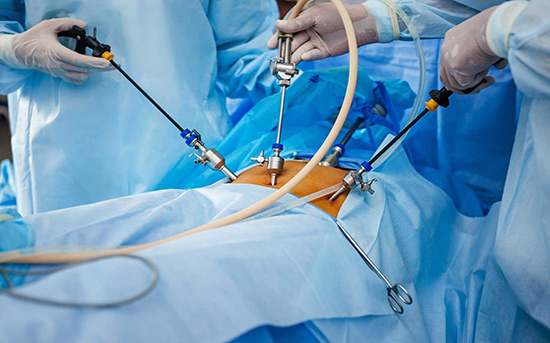
Choosing who will operate on you, or on your mother or father, is one of the most important decisions a family makes. Laparoscopic surgery, the keyhole method many people call doorbeen surgery, is now common for gallbladder stones, hernia, appendix and many other problems. But the result depends a great deal on the surgeon and the surgical team behind them. Knowing how to choose the best laparoscopic surgeon for your needs comes down to 10 practical questions, which you can ask anywhere, whether in Gopalganj, Patna or any other city.
How to choose the best laparoscopic surgeon, and why it matters
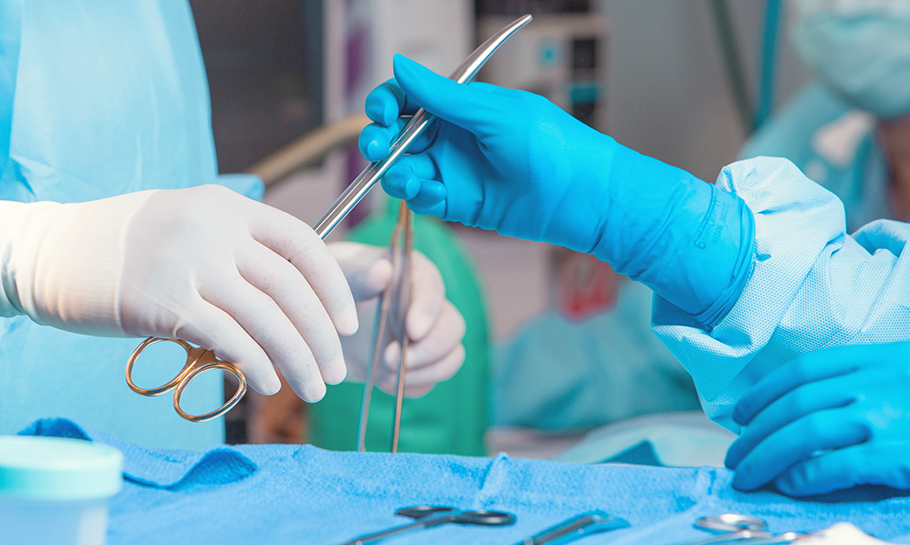
In laparoscopic surgery, the surgeon works through small cuts while watching a screen. It needs special training, steady hands and good judgement. The surgeon must also know when keyhole surgery is not safe and when to change to open surgery. The hospital matters too: the operation theatre, the anaesthesia team, the ICU and the nursing care after the operation all affect how safely you recover.
10 questions to ask a laparoscopic surgeon
1. Does the doctor have the right degree?
A surgeon who performs abdominal operations should have an MBBS degree followed by a postgraduate surgical qualification, such as MS (General Surgery) or an equivalent recognised degree. Many surgeons also take extra training in laparoscopy. Look at the degrees written on the prescription or the board, and do not hesitate to ask where they were earned.
2. Is the doctor registered with a medical council?
Every doctor practising modern medicine in India must be registered with a State Medical Council or the National Medical Commission. The registration number is usually printed on the prescription. You can check doctor registration in India on the Indian Medical Register, a public search on the National Medical Commission (NMC) website, by the doctor's name, registration number or State Medical Council. It takes a few minutes and is worth doing.
3. How much experience does the surgeon have with my operation?
Ask how often the surgeon performs the operation you need. A surgeon who does laparoscopic gallbladder or hernia surgery regularly is more familiar with difficult situations. It is also fair to ask how many years they have been operating and where they trained.
4. Will the same surgeon do my operation?
Ask who will actually perform the surgery and who will assist. You have the right to know.
5. What happens if the operation cannot be finished by laparoscopy?
Sometimes, because of heavy swelling, bleeding or old scar tissue, the surgeon has to change to open surgery for safety. This is called conversion. It is not a failure; it shows good judgement. Ask whether the surgeon is also trained in open surgery. A surgeon who says conversion never happens is not giving you the full picture.
6. Is there ICU backup and 24-hour emergency care?
Most patients recover without problems. But if something unexpected happens, such as bleeding or breathing difficulty, the hospital should have an ICU and emergency care available at any hour, in the same building.
7. Who will give the anaesthesia?
Most laparoscopic operations are done under general anaesthesia. Ask whether a qualified anaesthesia doctor will be present, and whether you will have a check-up before surgery, called a pre-anaesthetic check. This is especially important for patients with heart disease, diabetes or breathing problems.
8. Did the surgeon explain everything clearly?
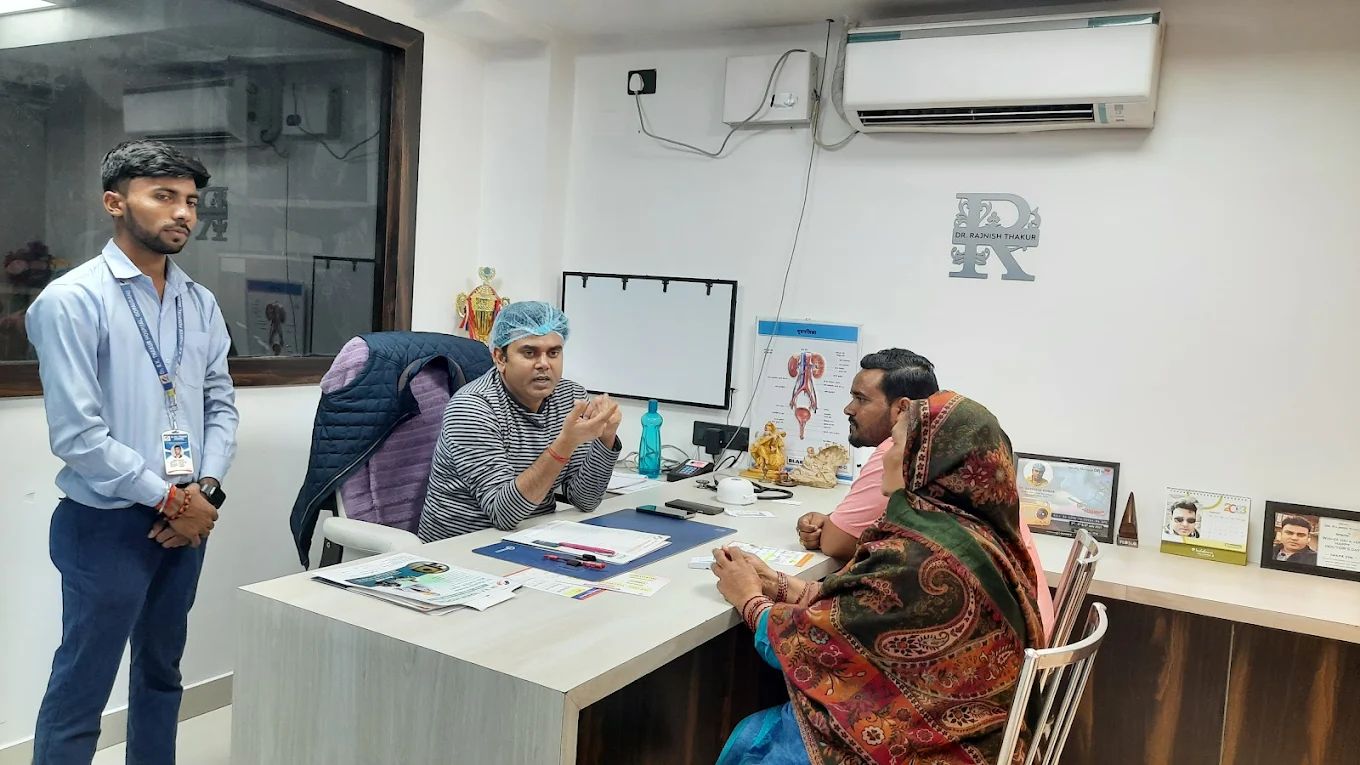
A good surgeon explains, in words you understand, why the operation is needed, whether there are other options, how it will be done, the possible risks, how long recovery takes and the likely cost. You should feel free to ask questions, and your family should be included. Be careful if you are pushed to decide within minutes for a problem that is not an emergency, or if you are promised "no pain", "no scar" or "100% success". No honest surgeon can promise that.
9. What tests will be done before surgery?
Safe surgery starts with proper checks: blood tests, blood sugar, ECG, chest X-ray and, for some patients, heart tests. Tests are chosen according to age and health. If a surgeon plans to operate without basic tests, ask why.
10. What is the follow-up plan, and what do other patients say?
Ask when you will come back to have your wounds checked, when the histopathology report (the microscope test of removed tissue) will come, and whom to call at night if you have a problem. Then read what real patients say. Reviews from many different people over several years tell you more than a single advertisement.
Warning signs to watch for
- No degree or registration number displayed, or a refusal to share it.
- Guarantees such as "100% cure", "no pain" or "no scar".
- Pressure to get admitted the same day for a problem that is not urgent.
- No clear answer on what the cost estimate includes.
- No ICU, no anaesthesia doctor or no plan for emergencies.
How we answer these questions at Dr. R.K. Thakur Hospital
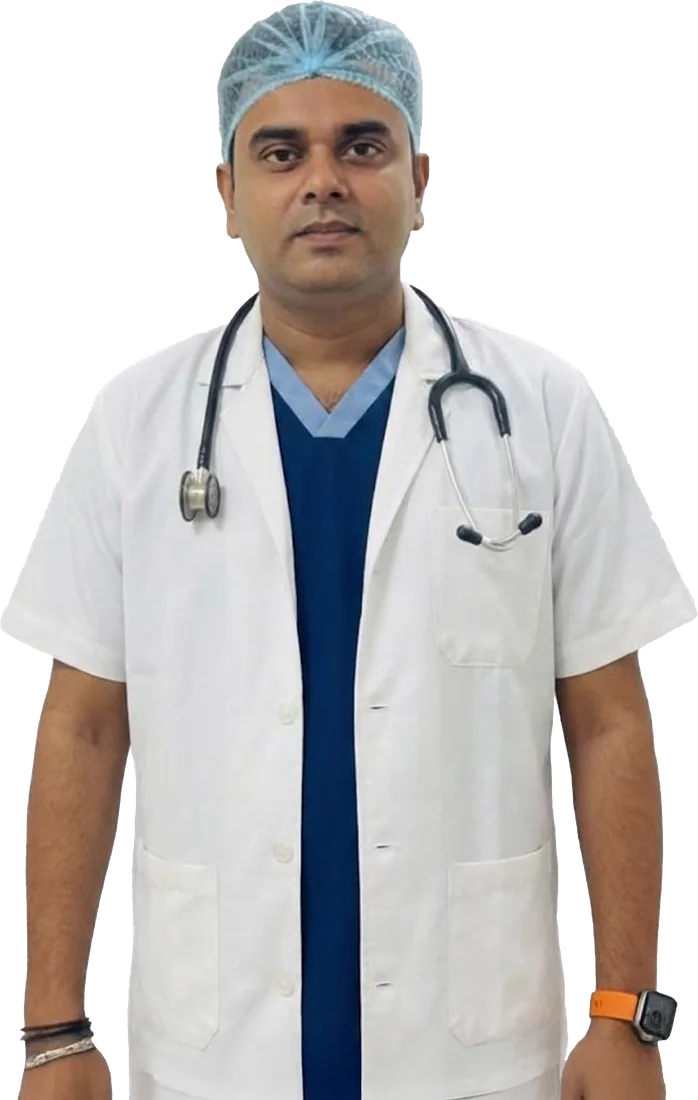
At our hospital, laparoscopic and general surgery is led by Dr. Rajnish Kumar Thakur, our founder and chief surgeon. He holds an MBBS (JLNMC, Bhagalpur) and an MS in General Surgery (Nalanda Medical College and Hospital, Patna). He worked as a Senior Resident at Lady Hardinge Medical College, New Delhi, and at IGIMS, Patna, and served as a Specialist Medical Officer (General Surgery and Laparoscopy) with the Government of Bihar. He has more than 16 years of surgical experience and has performed more than 10,000 surgeries.
Our hospital has modern operation theatres, an ICU, 24-hour emergency care, a pathology laboratory, digital X-ray and ultrasound. Anaesthesia is given by our trained anaesthesia specialist, and our visiting cardiologist does heart fitness checks before surgery when needed. Before a laparoscopic operation, Dr. Thakur explains the procedure to a family member of every patient. You can read what our patients say on our reviews page and learn more about our laparoscopic surgery department.
Dr. Thakur encourages every patient to make these checks. In his words, from an interview (Live Hindustan brand post, December 2025): "I want to tell every patient and their family: be educated and aware about your health. ... Before consulting any doctor, do check their degree."
Before you decide
Taking a second opinion for a planned operation is normal and sensible, and we always respect that choice. Bring all your reports to each consultation, so that tests need not be repeated. It also helps to understand the risks and the costs in advance. Please read our guides on the benefits and side effects of laparoscopic surgery and on what decides laparoscopic surgery cost in Gopalganj.
When to see a doctor
- You have been told you need an operation and want a clear explanation or a second opinion.
- An ultrasound has shown gallbladder stones, a hernia, an ovarian cyst or another problem.
- You have stomach pain that keeps coming back and the cause is not clear. Sometimes a diagnostic laparoscopy, a keyhole look inside the abdomen, is advised.
- You have sudden severe stomach pain, vomiting or fever. Do not wait for an appointment; come to our emergency, which is open 24 hours.
Dr. Thakur sees patients in the OPD at Dr. R.K. Thakur Hospital, Gopalganj, from Monday to Friday, 10 am to 7 pm. Patients come to us from Gopalganj, Siwan, Saran, the Champarans and nearby districts of Uttar Pradesh. Please call or WhatsApp us on +91 72739 94786 to book your OPD visit or to send your reports. You are welcome to ask us every question on this list.