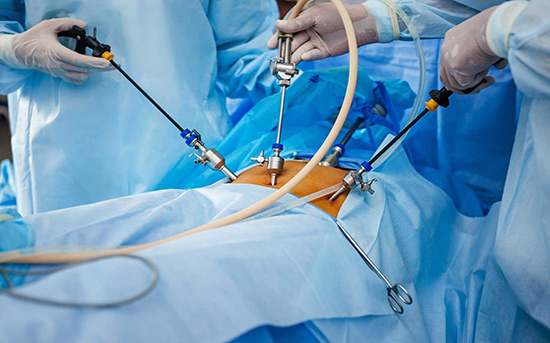
Laparoscopic surgery, the keyhole method many people call doorbeen surgery, has changed how common operations are done. Before agreeing to it, families in Gopalganj often ask us two questions: what are the benefits, and what are the laparoscopic surgery side effects? Here we answer both honestly and in plain words, so that you can talk to your surgeon with confidence.
What is laparoscopic surgery?
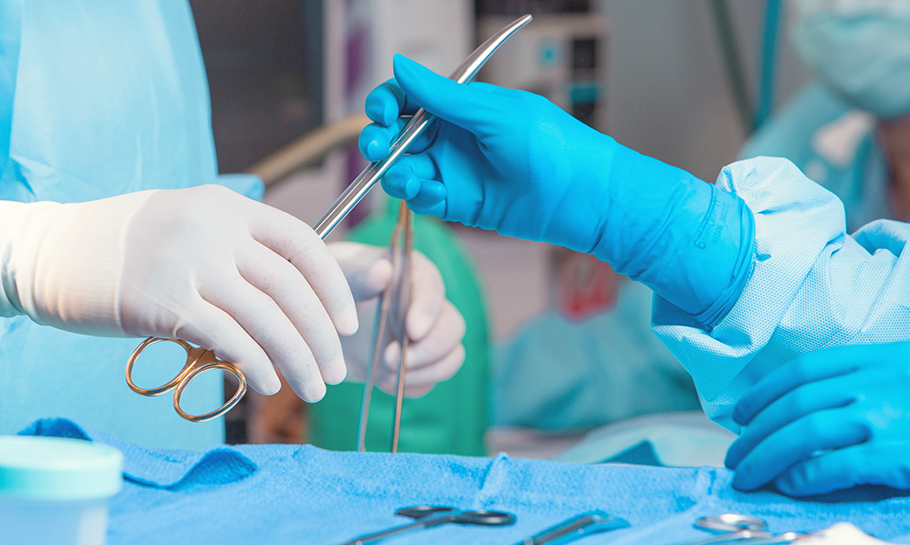
In laparoscopic surgery, the surgeon makes a few small cuts, usually about half a centimetre to one centimetre long, instead of one large cut. The abdomen is gently filled with carbon dioxide gas to create space. A thin telescope with a camera, called a laparoscope, shows a magnified picture of the inside on a screen, and the surgeon operates with long, thin instruments. It is used for gallbladder stone surgery, hernia repair, appendix removal, uterus removal, ovarian cysts and to find the cause of stomach pain. Our guide on how laparoscopic surgery is done explains each step.
Benefits of laparoscopic surgery
Compared with open surgery, which uses one larger cut, most patients have:
- Less pain after the operation, so fewer painkillers are needed.
- Smaller scars. The cuts are small, though they still leave marks.
- A shorter hospital stay. After many planned laparoscopic operations, most patients go home in 1 to 2 days.
- Earlier walking and eating, often on the same day or the next morning.
- A quicker return to work. Many people go back to light work in 1 to 2 weeks, depending on the operation and the job.
- Fewer wound problems. Small cuts usually carry a lower chance of wound infection, and of a hernia forming at the cut, than one large wound.
- A clear, magnified view, which helps the surgeon see the organs in detail.
These benefits are why laparoscopy is now the usual method for many common operations. Our guide on laparoscopic vs open surgery compares the two methods in more detail.
Laparoscopic surgery side effects: what is common
Most side effects are mild and settle within days. We explain them before surgery, because knowing about them in advance makes them far less worrying.
Shoulder pain after laparoscopy
Many patients are surprised to feel pain in one or both shoulders after keyhole surgery on the abdomen. Some of the gas used during the operation stays inside for a short time and irritates the diaphragm, the muscle below the lungs. The diaphragm shares nerves with the shoulder, so the pain is felt there. It usually settles in 1 to 3 days. Walking, gentle movement and the medicines we prescribe help.
Gas, bloating and discomfort
The abdomen can feel full, bloated or tight for a few days. Some patients also have mild nausea from the anaesthesia. Sips of water, light food and walking help.
Pain and bruising at the cuts
The small wounds can be sore and slightly bruised. This improves over about a week.
Sore throat and tiredness
A breathing tube is used during general anaesthesia, so the throat can feel sore for a day or two. Feeling tired for some days is normal after any operation.
Crackling under the skin
Sometimes a little gas collects under the skin and feels like crackling when pressed. It is usually harmless and is absorbed on its own.
Less common risks
Like every operation, laparoscopic surgery has some risks. Most are uncommon, but we believe you should know about them:
- Bleeding during or after the operation.
- Infection at a cut or inside the abdomen.
- Injury to nearby organs, such as the intestine, bladder, blood vessels or, in gallbladder surgery, the bile duct. This is rare.
- A hernia at one of the cuts later on, most often at the navel.
- Blood clots in the legs, especially in older or less mobile patients.
- Reactions to anaesthesia, or a chest infection.
At our hospital, careful tests before surgery, our experienced surgical and anaesthesia team, sterile technique and early walking after surgery help keep these risks low. Our surgeon will explain the risks that apply to your own operation.
Conversion to open surgery
In a small number of patients, the surgeon changes from laparoscopic to open surgery during the operation. This may happen if there is heavy swelling, bleeding that is hard to control through small cuts, dense scar tissue from old operations, or if the organs cannot be seen clearly. Conversion is a safety decision, not a failure. If it happens, recovery is usually longer, as after open surgery. That is why our consent form mentions it, and why your surgeon should be trained in both methods. Dr. Rajnish Kumar Thakur, our founder and chief surgeon, performs both laparoscopic and open operations.
Is laparoscopic surgery safe? Who may not be suitable
For most people, laparoscopic surgery is a safe and well-established method. But it is not the right choice for everyone. Our surgeon may advise open surgery, or extra precautions, if you have:
- Serious heart or lung disease, because the gas and the anaesthesia put extra load on the heart and lungs.
- Many previous open operations on the abdomen, which can leave dense adhesions (bands of scar tissue).
- A bleeding problem that has not been corrected.
- A very large mass, or an organ that is badly swollen.
- Advanced pregnancy, or a very unwell condition in an emergency, such as shock.
Age alone is usually not a reason to avoid laparoscopy. Many older patients do well after proper fitness checks. At Dr. R.K. Thakur Hospital, our visiting cardiologist can do heart fitness checks before surgery, and we have an ICU for patients who need close monitoring.
How to lower the chance of problems
- Tell us about all your illnesses and medicines, especially blood thinners and diabetes and blood pressure medicines.
- Keep your sugar and blood pressure under control before surgery.
- Stop smoking or bidi as early as possible before surgery.
- Follow our fasting instructions exactly.
- Start walking after surgery as advised, and follow our wound care advice.
For the weeks after the operation, please read our guide on recovery after laparoscopic surgery.
When to see a doctor
After surgery, please contact us quickly if you have:
- Fever, or redness, swelling or pus at a cut.
- Stomach pain that keeps increasing instead of getting better, or a swollen, hard abdomen.
- Repeated vomiting, or you cannot pass urine or gas.
- Yellow eyes after gallbladder surgery.
- Breathlessness, chest pain, or swelling and pain in one leg.
If you are thinking about an operation and want to know whether laparoscopy suits you, please meet Dr. Thakur in our OPD. He sees patients at Dr. R.K. Thakur Hospital, Gopalganj, from Monday to Friday, 10 am to 7 pm. Please call or WhatsApp us on +91 72739 94786 to book your OPD visit. Our emergency is open 24 hours.