Piles laser treatment recovery time is usually shorter than many people fear, but it is not the same for everyone. If you have been searching for bawasir ka ilaj and a doctor has mentioned laser, you will naturally want honest answers: will it hurt, how many days off work you need, and can the piles come back? Below, our surgical team answers these questions in plain words and compares laser with the stapler (MIPH) and conventional surgery.
What is laser treatment for piles?
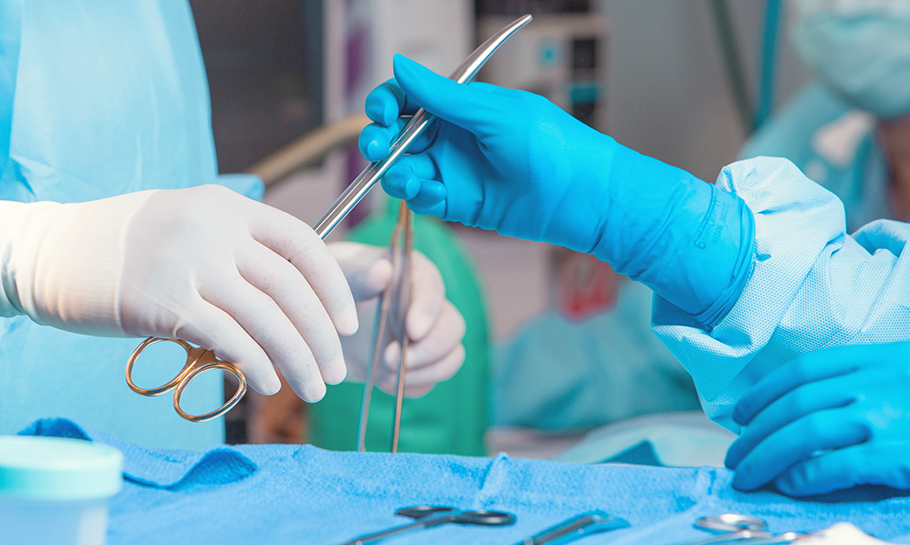
Piles (haemorrhoids) are swollen cushions of blood vessels inside and around the back passage. They can bleed, come out while passing stool, itch or feel heavy. In laser treatment, the surgeon passes a thin laser fibre into each pile through a very small opening. Controlled laser energy seals the blood supply and shrinks the pile from inside over the next few weeks. There is no large cut, and usually no stitches on the outside.
At Dr. R.K. Thakur Hospital, Gopalganj, we perform laser treatment with a diode laser, usually under spinal anaesthesia (the lower body is made numb), and it takes about 20 to 45 minutes. Most patients stay 1 day, and some go home the same day.
Who is suitable for laser piles treatment?
Laser is not the right choice for every patient. Doctors grade internal piles from 1 to 4, depending on how much they come out.
- Often suitable: grade 2 and grade 3 piles that bleed, or come out and go back, when medicines and diet changes have not helped.
- May need another method: very large grade 4 piles that stay outside, piles with a big external skin part, or piles along with a fissure or fistula.
- Usually no procedure needed: small grade 1 piles, which often settle with fibre, water and medicines.
Before any procedure, our surgeon does a private examination to confirm that the bleeding really comes from piles. Bleeding from the back passage can also come from a fissure, a polyp or, less commonly, a growth in the bowel. In older patients, or when the symptoms do not fit, a test such as colonoscopy may be advised first.
Is piles laser treatment painful or not?
Patients ask us this question often, and it deserves an honest answer. The procedure is done under anaesthesia, so you should not feel pain during it. Afterwards, many patients feel less pain than after conventional open surgery, because there is no large wound on the sensitive skin around the anus.
But it is not free of pain. For the first few days most people feel some soreness, heaviness or burning, especially while passing the first few stools. Pain medicines, warm sitz baths and a stool softener keep this manageable for most people. How much discomfort you feel depends on the size and number of piles, whether there is an external part, and your own tolerance.
Piles laser treatment recovery time: what to expect
Day of the procedure
Once the anaesthesia wears off, you can usually walk within a few hours and start light food as our team advises. Some people find it hard to pass urine for a few hours after spinal anaesthesia; our nurses watch for this.
First week
Mild swelling, a little bleeding or discharge, and a feeling of fullness are common. Many people return to desk work, shop work or light household work within a few days to a week.
Weeks 2 to 3
Discomfort usually settles. Avoid heavy lifting, long cycle or motorcycle rides and hard farm work for about 2 to 3 weeks, or as our surgeon advises.
Weeks 4 to 6
The treated piles keep shrinking during this time. The final result is usually judged at a follow-up visit after several weeks.
Recovery can be slower if the piles were large, if you have diabetes, or if constipation continues. Our surgeon decides the plan for your case.
Diet and care after laser piles treatment
- Eat fibre every day: dal, green vegetables, fruits such as papaya and guava, whole wheat roti, and isabgol (psyllium husk) if prescribed.
- Drink enough water to keep your urine pale yellow, and more in summer.
- Take the stool softener and pain medicines exactly as prescribed. Do not stop the softener early on your own.
- Sit in a tub of warm water (sitz bath) for 10 to 15 minutes, 2 to 3 times a day and after passing stool.
- Do not strain, and do not sit on the toilet for a long time. Please leave the phone and newspaper outside.
- For the first few weeks, limit very spicy food, fried food and alcohol, which can worsen burning and constipation.
Can piles come back after laser treatment?
Yes, they can. No method, whether laser, stapler or conventional surgery, can promise that piles will never return. The treated piles usually do not come back in the same form, but new piles can form over time if the causes continue. Common causes in our region are long-standing constipation, drinking too little water in summer, straining, long hours of sitting, heavy lifting and pregnancy.
The chance of piles returning is lower when you keep your stools soft for life, not only for a few weeks. For very large piles, laser alone may not be enough, which is why choosing the right method at the start matters.
Laser vs MIPH stapler vs conventional surgery
Laser treatment
Often suits grade 2 and grade 3 piles. Tiny opening, no large wound, and for many patients less pain and a quicker return to work. It may be less suitable for very large piles with a big external part.
MIPH (stapler surgery)
MIPH (minimally invasive procedure for haemorrhoids) uses a circular stapler to remove a ring of loose lining above the piles and lift them back into place. It is often chosen for piles that come out and need to be pushed back in. The cut lies above the most sensitive area, so pain is usually less than with conventional surgery. A feeling of fullness or urgency for some weeks is common.
Conventional (open) haemorrhoidectomy
The older standard operation, in which the piles are cut away. It deals well with large external piles, but the open wounds usually cause more pain and take a few weeks to heal.
The right choice depends on your examination, not on what a neighbour had. Read more on our page on laser and stapler piles treatment. If your main problem is sharp pain while passing stool, it may be a fissure, which is treated differently. See fissure treatment and our guide to the difference between piles, fissure and fistula.
Costs and the Ayushman card
Costs depend on the method, the tests needed, the length of stay and the room type, and we explain them clearly before admission. Ayushman Bharat PM-JAY card holders can ask our Ayushman help desk whether their treatment is covered under the package rules.
When to see a doctor
- Bleeding from the back passage for the first time, or bleeding that keeps coming back
- Piles that come out and have to be pushed back, or that do not go back
- A painful, hard, bluish lump near the anus
- A change in bowel habit, weight loss or weakness, especially after the age of 40 to 45
- After laser treatment: heavy bleeding, fever, severe pain that keeps increasing, or not being able to pass urine. Please come to us straight away; our emergency is open 24 hours.
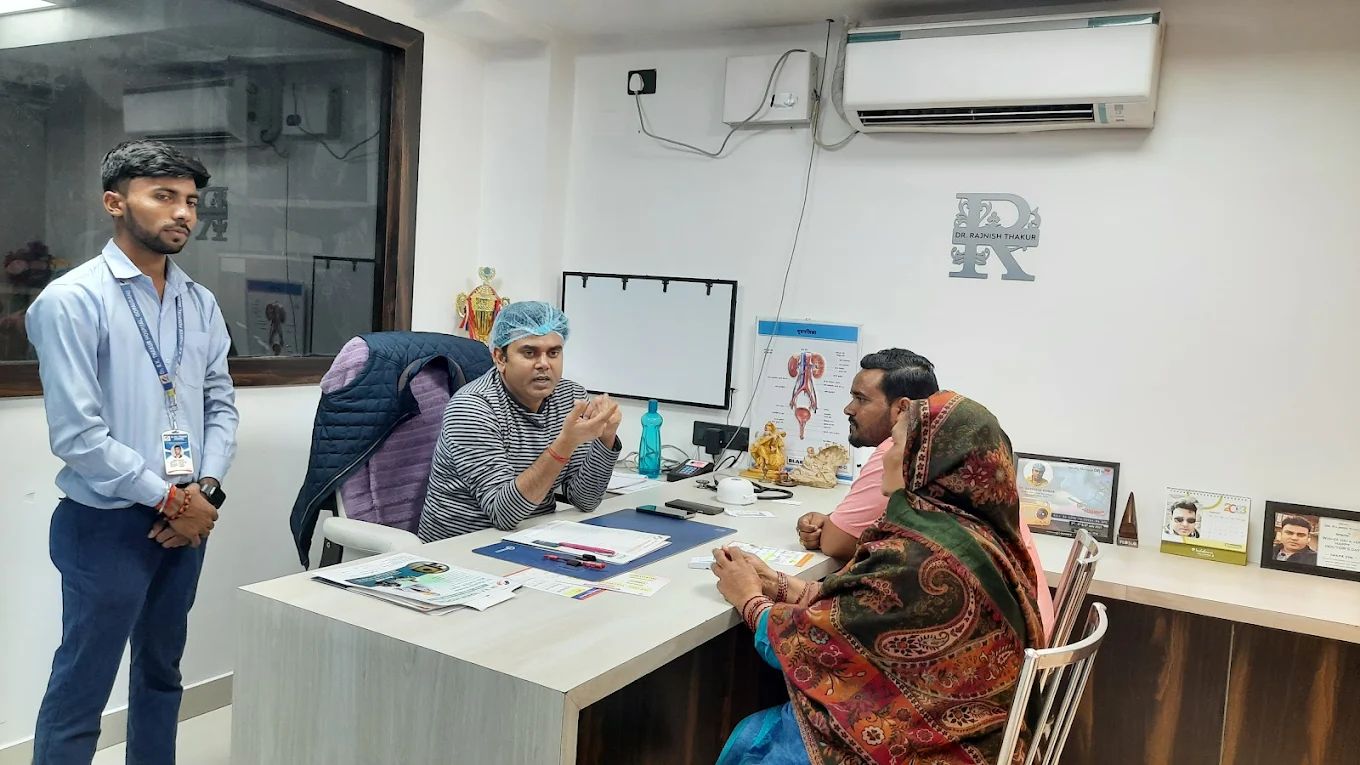
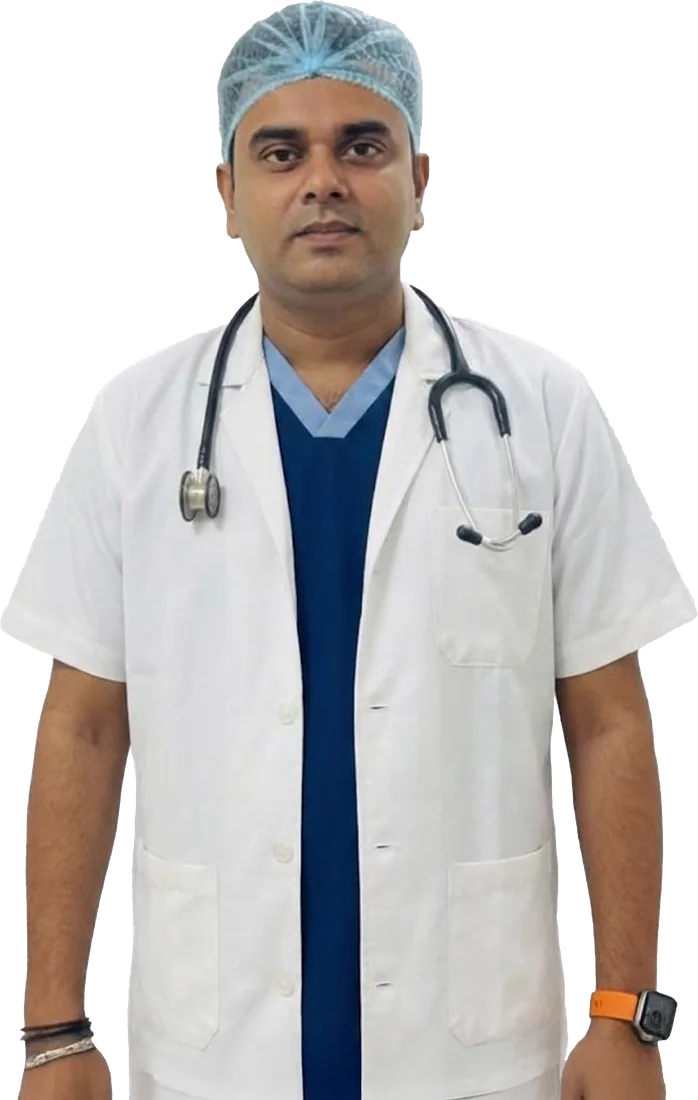
Many people suffer with piles for years because of shyness. There is no need for this. At Dr. R.K. Thakur Hospital, Gopalganj, Dr. Rajnish Kumar Thakur, our founder and chief surgeon and a Laparoscopic, Laser, Urology and General Surgeon with 16+ years of experience, examines every patient in private and explains each option before any decision is made. Families come to us from Gopalganj, Siwan, Chhapra, Motihari, Bettiah and nearby Uttar Pradesh. Please call or WhatsApp us on +91 72739 94786 to book your OPD visit (Monday to Friday, 10 am to 7 pm).