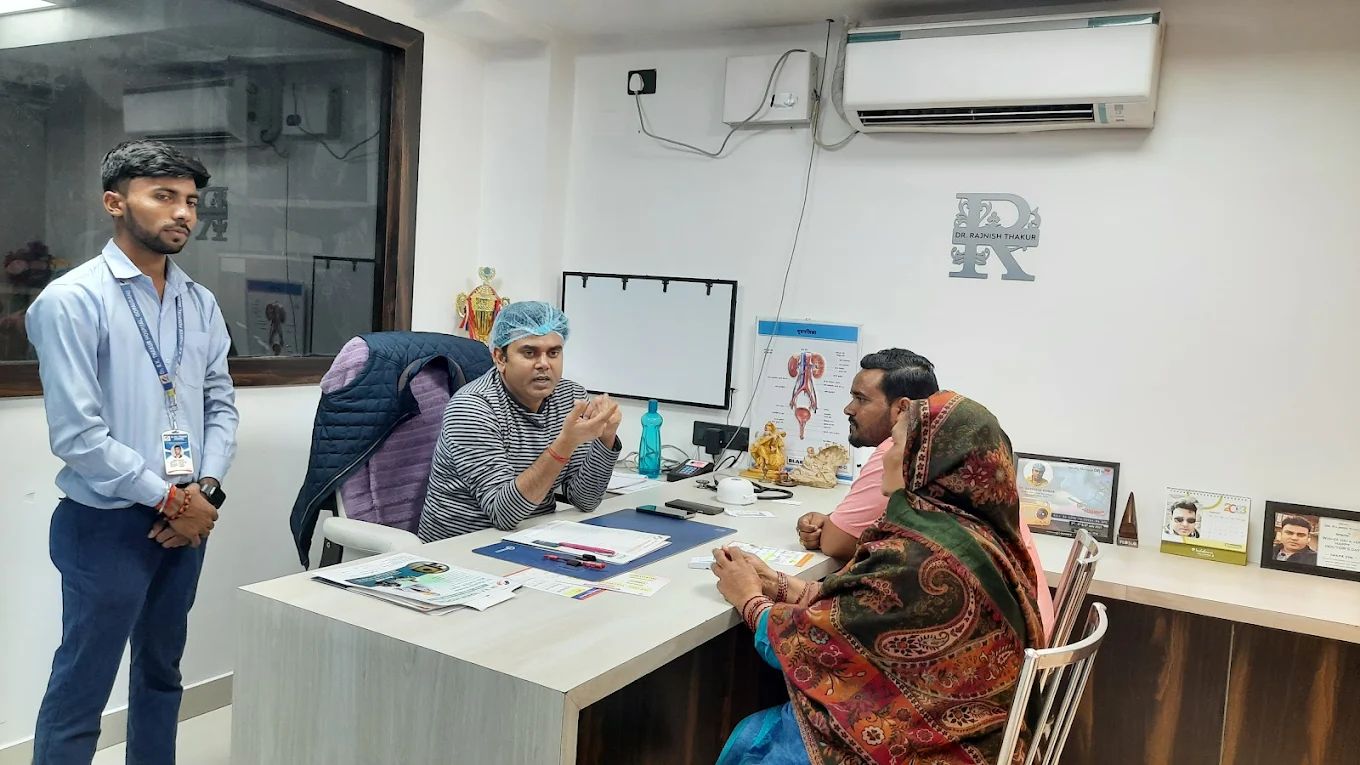
Pain, bleeding or a swelling at the back passage (anus) is very common, yet many people suffer quietly for months because they feel shy to talk about it. Please do not feel ashamed. We examine these problems regularly in our OPD, always in privacy, and the examination takes only a few minutes. Many people call every such problem piles, but three different conditions are common: piles, fissure and fistula. They need different treatment, so it helps to know the difference between piles, fissure and fistula.
Piles (haemorrhoids)
Piles are swollen blood vessels inside or around the anus. They are often linked to long-standing constipation, straining, sitting long on the toilet, pregnancy and heavy lifting.
Common signs:
- Bright red blood during or after passing stool, often as drops in the pan or streaks on the stool. There is usually no pain with this bleeding.
- A soft lump that comes out while passing stool. It may go back by itself, need to be pushed back, or stay outside.
- Itching, wetness or mucus around the anus.
- Sudden severe pain with a hard, bluish lump, which can mean a clot has formed in a pile.
Early piles often improve with diet changes and medicines. Larger piles, or piles that keep bleeding, may need a procedure such as stapler piles surgery (MIPH), laser treatment or another operation, depending on the type of piles.
Fissure
A fissure is a small tear in the thin lining of the anal canal. It usually happens when a hard, dry stool is passed with force. Sometimes it follows repeated loose motions or childbirth.
Common signs:
- Sharp, cutting or burning pain while passing stool, which many people describe as passing glass.
- Pain that continues for minutes or even hours afterwards.
- A small amount of bright red blood on the stool or on toilet paper.
- Fear of going to the toilet, which makes constipation worse.
- Sometimes a small skin tag near the tear.
A new fissure often heals in a few weeks with softer stools, plenty of water, fibre, warm water sitting baths (sitz baths) and ointments prescribed by the doctor. A fissure that does not heal over several weeks (a chronic fissure) may need fissure surgery.
Fistula (bhagandar)
A fistula-in-ano is an abnormal small tunnel between the inside of the anal canal and the skin near the anus. It usually forms after an anal abscess, which is a painful swelling with pus near the anus that bursts or is drained.
Common signs:
- A small opening or pimple-like spot near the anus that keeps discharging pus or blood-stained fluid.
- Staining of underwear, often with a bad smell.
- Pain and swelling that build up, ease when the pus drains, and then come back.
- Sometimes fever when pus collects.
A fistula does not heal with medicines or creams. Antibiotics may reduce infection for a while, but the tunnel remains. Treatment is fistula surgery, planned carefully to protect the muscle that controls stool. For a complex fistula, the doctor may advise an MRI scan before surgery to map the tunnel.
Quick comparison
- Main complaint: piles cause bleeding without pain, or a lump; a fissure causes sharp pain during and after stool; a fistula causes repeated pus discharge from an opening near the anus.
- Pain: usually mild in piles unless a clot forms; severe in fissure; comes and goes with pus in fistula.
- Healing without surgery: early piles and new fissures often improve; a fistula does not.
This is only a general guide. The same person can have more than one problem, and only an examination can confirm the cause.
Blood in stool is not always piles
Most bleeding from the back passage is due to piles or a fissure. But bleeding can also come from polyps (small growths) in the bowel, inflammation of the bowel, or bowel cancer. Please do not treat yourself for months without an examination. The doctor may advise a colonoscopy, a test in which a thin camera looks inside the large bowel, especially if:
- You are over 40 and have new bleeding.
- The blood is dark or mixed with the stool.
- Your bowel habit has changed for several weeks, with constipation or loose motions.
- You are losing weight or appetite, or feel weak and tired, which may mean low blood (anaemia).
- Someone in your family has had bowel cancer.
- Bleeding continues despite treatment.
Everyday steps that help
- Eat more fibre: green vegetables, fruits, whole grains, dal and salad.
- Drink enough water through the day.
- Do not strain, and do not sit on the toilet for long, for example while using a phone.
- Sit in a tub of warm water for 10 to 15 minutes, 2 to 3 times a day, to ease pain.
- Do not apply random pastes, chemicals or home mixtures to the area. They can burn the skin and delay proper treatment.
Treatment options at our hospital
Treatment depends on the problem and how advanced it is. Many patients do well with diet changes and medicines alone. When a procedure is needed, we offer stapler piles surgery (MIPH) and surgery for fissure and fistula at Dr. R.K. Thakur Hospital, and we have a diode laser that can be used for piles, fissure and fistula in suitable cases. Laser or stapler treatment is not right for everyone. Our surgeon will examine you and explain which option fits your condition.
When to see a doctor
- Any bleeding from the back passage, especially the first time or if you are over 40.
- Pain while passing stool that lasts more than a week or two.
- A painful swelling near the anus with fever. This may be an abscess and needs prompt drainage.
- Pus or discharge from an opening near the anus.
- Heavy bleeding, dizziness or fainting. Come to our 24x7 emergency.
At Dr. R.K. Thakur Hospital, we examine patients from Gopalganj, Siwan, Chhapra and nearby districts in privacy to find out which of these three problems they have. You can read more about our laser and stapler piles treatment.
Dr. Rajnish Kumar Thakur, our founder and chief surgeon, and our surgical team treat piles, fissure and fistula with medicines, procedures or surgery as needed. Please call or WhatsApp us on +91 72739 94786 to book an OPD visit. Ayushman Bharat card holders are welcome to ask our help desk whether their treatment is covered.