Piles Treatment
We treat piles (haemorrhoids) with privacy and respect, from diet and medicines for early piles to laser treatment and MIPH stapler surgery when a procedure is needed, at Dr. R.K. Thakur Hospital, Gopalganj.
We care for anal fissure (फिशर), the painful cut in the anus, at Dr. R.K. Thakur Hospital, Gopalganj. Most fissures heal with diet, sitz baths and ointments; for a chronic fissure, we may advise a small operation.
At Dr. R.K. Thakur Hospital, we provide fissure treatment in Gopalganj for anal fissure (फिशर), the painful cut at the anus, with care and privacy. Most new fissures heal with fissure treatment without surgery: diet, stool softeners, warm sitz baths and ointments, and we advise a small operation only for a chronic fissure that does not heal. Care is led by Dr. Rajnish Kumar Thakur, our founder and chief surgeon, MS (General Surgery), and we perform fissurectomy and sphincterotomy at our hospital. Our patients come from Gopalganj, Siwan, Chhapra, Motihari, Bettiah and the nearby Uttar Pradesh districts of Kushinagar and Deoria. Families trust Dr. Thakur for his 16+ years of surgical experience, his work at IGIMS Patna and Lady Hardinge Medical College, New Delhi, and his practice of trying medicines first when that is the right choice. Please visit our OPD, Monday to Friday, 10 am to 7 pm, or send your reports on WhatsApp to +91 72739 94786.
An anal fissure (फिशर, गुदा में चीरा) is a small tear in the thin lining of the anus. It usually starts after passing a hard stool, and sometimes after loose motions or childbirth. The typical sign is a sharp, cutting or burning pain during stool that can last for minutes to hours afterwards, often with a little bright red blood.
The pain makes the ring muscle of the anus (the internal sphincter) go into spasm. This spasm reduces blood flow to the cut and stops it from healing. Many people then fear going to the toilet, become more constipated, and the cycle continues.
A fissure present for less than about 6 weeks is called acute, and most acute fissures heal without surgery. A fissure that lasts beyond 6 to 8 weeks despite proper treatment is called chronic, and may need a small operation.
Please start treatment early. Avoid painful home remedies or products that promise an overnight cure, and do not stop eating to avoid passing stool. We begin with a high-fibre diet, plenty of water, stool softeners, warm sitz baths (sitting in a tub of warm water) two to three times a day, and prescribed ointments that relax the muscle and ease pain.
We consider surgery for a chronic fissure that has not healed with this treatment. Lateral internal sphincterotomy is a small, measured cut in part of the internal sphincter muscle on one side. It relieves the spasm so the fissure can heal. Fissurectomy means removing the hard, unhealthy edges and any skin tag so that a fresh wound can heal. Our surgeon may use one or both. A fissure in an unusual position may need tests for other causes.
Many of our patients find that the sharp fissure pain eases within a few days of surgery. Take the stool softener and pain medicines as advised, eat fibre, fruits and vegetables, and drink plenty of water. Warm sitz baths two to three times a day and after each stool help healing. A little bleeding or discharge for a few days is common. Most people return to routine work within about a week, and the wound usually heals over 4 to 6 weeks. Please keep your follow-up visit with us.
Soft stool is the most important part of fissure care, both before and after surgery. We explain these habits to every patient.
Possible risks include bleeding, infection, pain, difficulty passing urine for a short time after spinal anaesthesia, and slow healing. After sphincterotomy, a small number of patients have some difficulty controlling gas or, rarely, stool. This is usually mild and often improves with time. Our surgeon measures the muscle cut carefully and may avoid sphincterotomy in people whose muscles are already weak, such as some women after childbirth. A fissure can occasionally come back if constipation returns, so we give clear diet advice at discharge.
The fissure operation cost depends on your case, so we do not quote one fixed figure. Many fissures need only medicines and a follow-up visit or two. If we advise surgery, the cost depends on the procedure (sphincterotomy, fissurectomy or both), the tests needed, the type of anaesthesia, the length of stay (usually 1 day), the room you choose and the medicines after discharge. After the consultation and reports, we give you a clear written estimate before admission, so your family can plan. You can send your reports on WhatsApp to +91 72739 94786 first.
We are empanelled under Ayushman Bharat PM-JAY for general surgery and laparoscopic surgery packages. Whether your treatment is covered depends on the scheme's package list and your eligibility, so please bring your Ayushman card and Aadhaar card and confirm with our Ayushman help desk before admission.
We understand that fissure pain is real, and we treat it with respect and privacy. Care is led by Dr. Rajnish Kumar Thakur, MS (General Surgery), who has 16+ years of surgical experience and 10,000+ surgeries performed, with experience at IGIMS Patna and Lady Hardinge Medical College, New Delhi. Fissurectomy is among the procedures we perform regularly. We try medicines first when that is the right choice, and advise surgery only when it is truly needed.
Most new (acute) fissures heal within a few weeks with a high-fibre diet, plenty of water, stool softeners, warm sitz baths and the ointments we prescribe. The key is soft stool without straining. If the fissure has lasted more than 6 to 8 weeks despite proper treatment, or keeps coming back, our surgeon may advise a small operation.
We start with a private examination to confirm the fissure and check for piles, fistula or other causes. Most patients first receive medicines: stool softeners, ointments that relax the anal muscle, pain relief and warm sitz baths, with a check-up after a few weeks. If a chronic fissure does not heal, we perform a short operation under spinal anaesthesia: sphincterotomy, fissurectomy, or both. Our surgeon explains which option suits you.
The operation usually takes 20 to 30 minutes, and most patients stay with us 1 day; some go home the same day. Many people find the sharp fissure pain eases within a few days. A little bleeding or discharge for a few days is common. Most people return to routine work in about a week, and the wound usually heals over 4 to 6 weeks. Our surgeon guides you based on your condition.
The skin of the anus has many nerve endings, so even a small cut is very painful. Passing stool stretches the cut, and the ring muscle then goes into spasm, which causes a burning pain that can last for hours. Soft stool, warm sitz baths and muscle-relaxing ointments break this cycle. Please do not stop eating out of fear of stool, because that makes constipation worse.
Home care is the main treatment for a new fissure: soft stool, fibre, isabgol, plenty of water and warm sitz baths. Ointments prescribed by a doctor relax the muscle and help healing. But please avoid applying harsh or burning substances, and be careful of products or people that promise an overnight or guaranteed cure without an examination. A fissure that has not healed in 6 to 8 weeks needs review by a surgeon.
Protecting your control is our priority. Sphincterotomy cuts only a small, measured part of the inner muscle. A small number of patients notice some difficulty holding gas or, rarely, stool, which is usually mild and often temporary. If your muscles are already weak, for example after a difficult childbirth, our surgeon may choose fissurectomy alone or another approach. Please discuss your concerns openly with us at the consultation.
We do not quote a fixed figure without examining you, because many fissures need only medicines. If surgery is needed, the cost depends on the procedure, the tests, the type of anaesthesia, the length of stay, the room you choose and the medicines after discharge. After the consultation and reports, we give you a clear written estimate before admission. You can send your reports on WhatsApp to +91 72739 94786 first.
We are empanelled under Ayushman Bharat PM-JAY for general surgery and laparoscopic surgery packages. Whether your fissure treatment is covered depends on the scheme's package list, the procedure and your eligibility. Please bring your Ayushman card and Aadhaar card, and ask our Ayushman help desk to check before admission. For other patients, we explain the expected cost clearly before admission.
Eat food that keeps the stool soft: whole grains, dal, green vegetables, fruits such as papaya and banana, and salad, with plenty of water and buttermilk. We may advise isabgol. Cut down on very spicy and fried food, maida items and alcohol. Please do not stop eating out of fear of passing stool, because that makes constipation and pain worse. Keep these habits after healing too.
Keep your stool soft for life. Eat whole grains, dal, green vegetables, fruits and salad, drink enough water and stay active. Go to the toilet when you feel the urge, and do not strain or sit for long. Treat loose motions promptly too. If pain or bleeding comes back, please see us early rather than waiting for it to get worse.
We advise choosing a qualified surgeon who treats the cause, not only the pain, and who tries medicines first when suitable. Dr. R.K. Thakur, our founder and chief surgeon, MS (General Surgery), has 16+ years of surgical experience and 10,000+ surgeries, and has worked at IGIMS Patna and Lady Hardinge Medical College, New Delhi. Patients travel to us from Siwan, Saran, the Champarans and Uttar Pradesh. You can read our patients' reviews on Google.
Yes. Patients regularly come to our hospital on Kamla Rai College Road, Arar, Gopalganj, from Chhapra, Siwan, Motihari, Bettiah, Kushinagar and Deoria. The first visit is an OPD consultation and examination, Monday to Friday, 10 am to 7 pm. If medicines are enough, you continue them at home with a follow-up visit. If surgery is needed, most patients stay about 1 day. You can send your reports on WhatsApp to +91 72739 94786.
Share your details and our team will call you back to plan your visit.
This information is for general awareness and does not replace a consultation. Treatment depends on each patient's condition.
Last updated: 30 September 2026
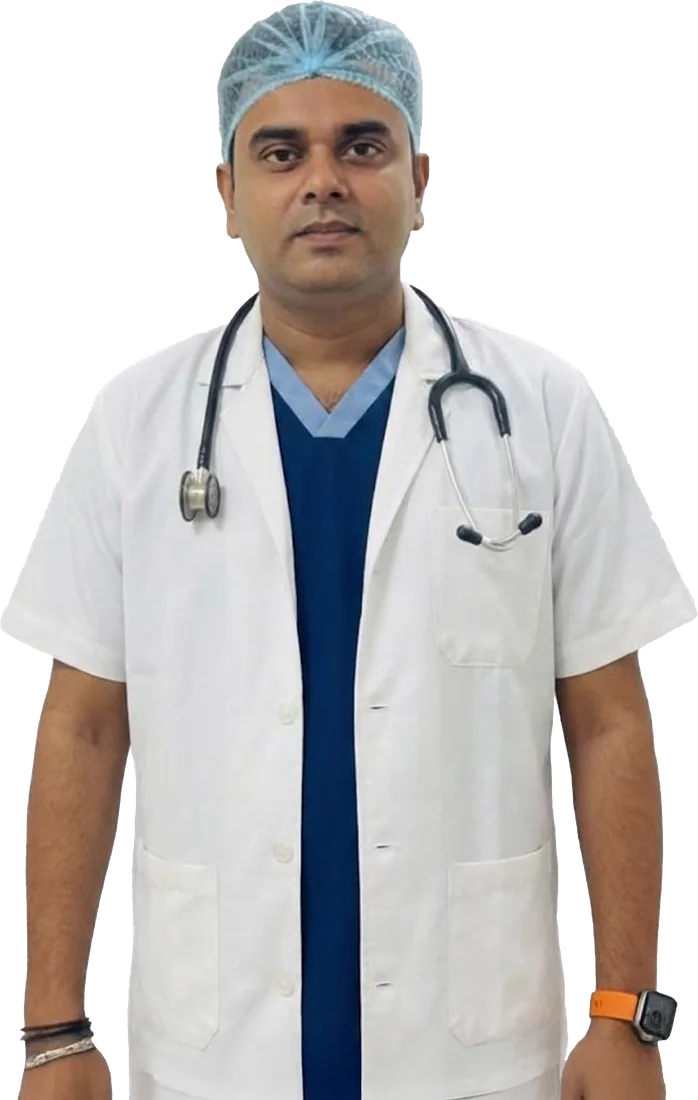
Founder and Chief Surgeon: Laparoscopic, Laser, Urology and General Surgeon
MBBS, DA, MS (General Surgery)
View detailsReal reviews from patients and families, as posted on our Google Business Profile.

I Recently Visited this Clinic in Gopalganj, Earlier I was a bit Hesitant, But Once I met the Doctor, I was so Sure & Confident that I am in Good Hands,
Very Well Experienced Doctor
Well Behaved Staffs
Nice Arrangements
& Most Important, Very Easy Procedure.
Would Always be Thankful to Mr. RK Thakur & His Team.
My relative hernia surgery at Dr RK Thakur Hospital Went Very Well, Skilled Doctors, Caring Staff and Smooth recovery, Highly Satisfied.
डाक्टर साहब बहुत अच्छे है उनका बात करने का अंदाज बहुत ही निराला है स्टाफ के बारे में कुछ नहीं कहा जा सकता बाकी हॉस्पिटल अच्छा हैDoctor sahib is very good, and the way he talks to patients is truly special. I cannot say much about the staff, but otherwise the hospital is good.
Share your name and phone number. Our team will call you back to plan your OPD visit.