Angioplasty and Stent
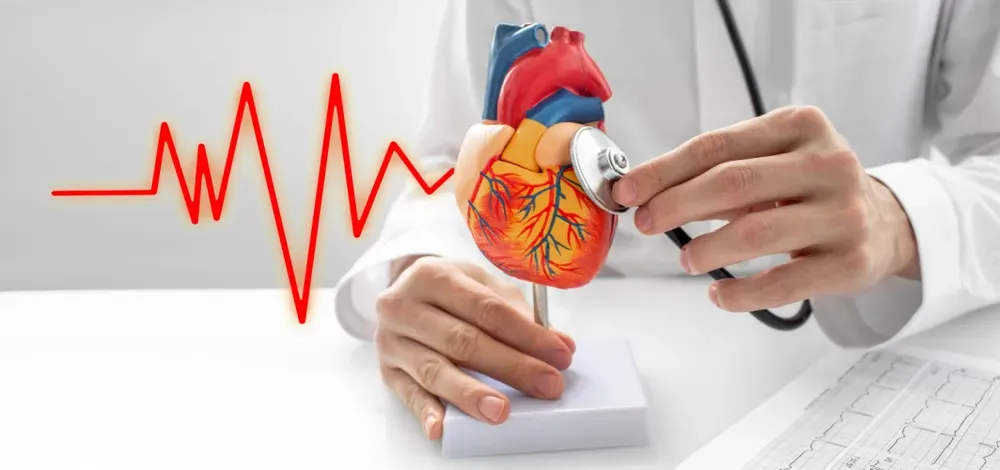
Angioplasty opens a blocked heart artery with a small balloon and usually a stent. Our cardiologist evaluates you, advises and arranges it when needed, and guides your medicines and lifestyle afterwards.
Coronary angiography is an X-ray test that shows blockages in the heart's arteries. Our cardiologist first checks you in our Cardiology OPD, and advises and arranges angiography only when it is needed.
At Dr. R.K. Thakur Hospital, we offer angiography advice in Gopalganj for anyone whose doctor has mentioned angiography, or who gets chest pain on walking. Dr. C.K. Yadav, our visiting Consultant Cardiologist (DM Cardiology), sees patients in our Cardiology OPD every Thursday and first checks you with a heart blockage test in Gopalganj itself: ECG, ECHO, TMT or Holter, with blood tests in our pathology laboratory. Angiography is done in a cath lab, and we do not have a cath lab at our hospital. When angiography is truly needed, our cardiologist advises it, arranges it at a suitable centre, and continues your care here afterwards. Many people with mild, stable symptoms first need medicines and lifestyle changes, not angiography. Patients come to our Thursday OPD from Gopalganj, Siwan, Chhapra, Motihari, Bettiah and nearby Uttar Pradesh. Please call or WhatsApp +91 72739 94786 to book, and bring all old ECGs and reports. For severe chest pain, please do not wait for Thursday: go to the nearest hospital with emergency care at once.
Your heart muscle gets its blood through small pipes called coronary arteries. When fat and cholesterol build up inside them, they become narrow or blocked. This can cause chest pain on effort (angina) or a heart attack.
Coronary angiography is a special X-ray test of these arteries. A thin, soft tube (catheter) is passed from an artery in the wrist or groin up to the heart, a dye is injected, and X-ray pictures show where an artery is narrowed and how badly. It is a test, not a treatment, but it helps decide between medicines, angioplasty (a stent) and bypass surgery.
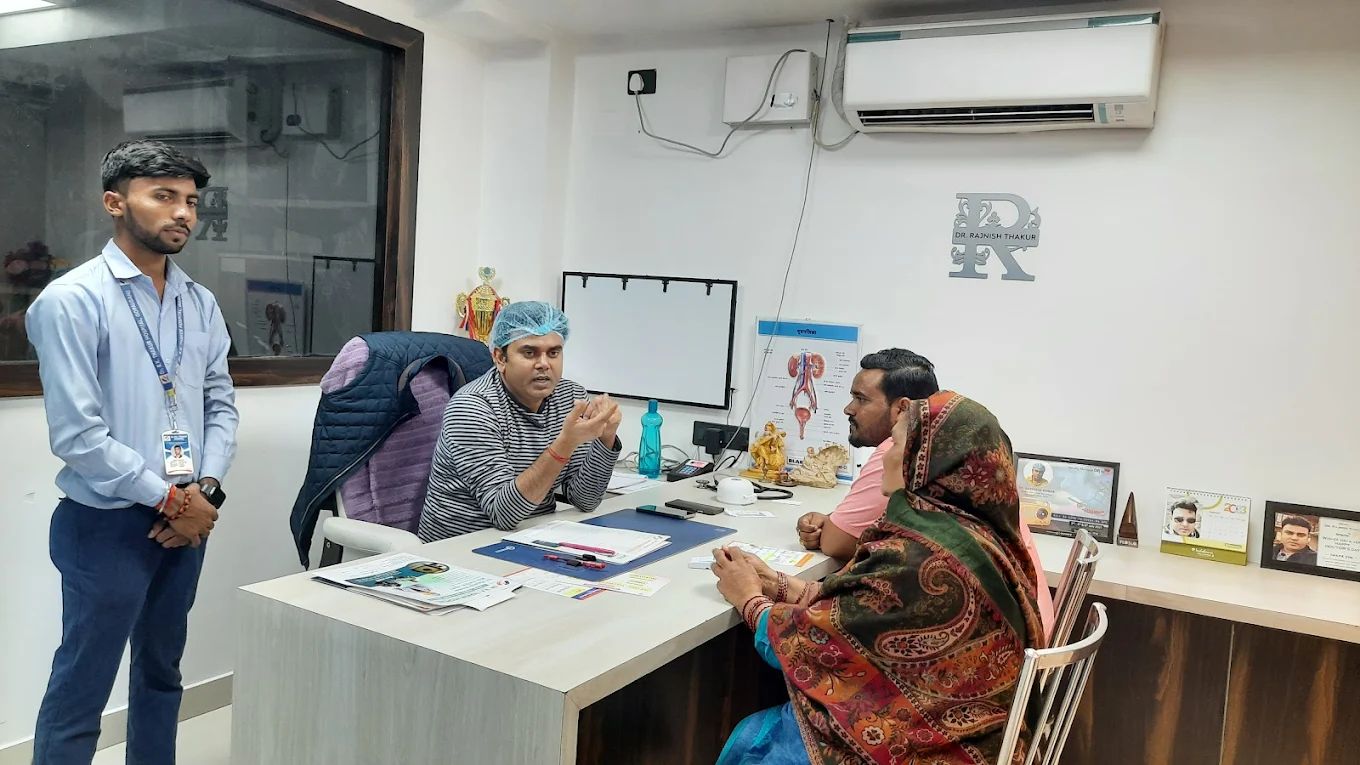
At our hospital, angiography is not the first step. Dr. C.K. Yadav, our Consultant Cardiologist (DM Cardiology), sees you in our Cardiology OPD every Thursday, and advises and arranges angiography only when it is needed.
Angiography is usually advised when a significant blockage is suspected: chest pain typical of angina, a TMT (treadmill test) showing the heart is short of blood on exercise, changes on ECG or ECHO, chest pain that is new or getting worse, or after a heart attack. It may also be needed before some heart valve operations.
Many people with mild, stable symptoms first need medicines and lifestyle changes, not angiography. So our cardiologist evaluates you first, with ECG, ECHO, TMT or Holter at our hospital, and blood tests for sugar, cholesterol and kidney function (kidneys are checked before any dye is used).
Warning: severe chest pain with sweating, breathlessness or fainting may be a heart attack. Please call for help immediately and go to the nearest hospital with emergency care. Do not wait for the OPD day.
Rest for the day and drink plenty of water, unless your doctor has limited your fluids. If the wrist was used, avoid lifting heavy things with that hand for a few days. If the groin was used, avoid heavy lifting and climbing many stairs for a few days. Keep the puncture site clean and dry. Most people return to their normal routine within a few days. Continue the medicines advised, and please come back to our Cardiology OPD with the angiography CD and report so our cardiologist can plan your treatment.
Before angiography: carry all reports, the list of your medicines and your kidney test result. Please tell our cardiologist if you are allergic to dye or iodine, have kidney disease, take blood thinners, or take diabetes tablets such as metformin, because some medicines may need changing. You will usually be asked not to eat for a few hours before. Come with a family member. After angiography: rest for the day and drink plenty of water unless your fluids are restricted. Keep the wrist or groin puncture site clean and dry. For a few days, avoid heavy lifting with that arm, or climbing many stairs after a groin puncture. Do not drive yourself on the same day. Get help at once for bleeding or a growing swelling at the puncture site, a cold or numb hand or leg, or chest pain. Please bring the angiography CD and report to our Thursday OPD.
Angiography is a common and generally safe test, but it carries some risk. There can be bruising or bleeding at the puncture site, an allergic reaction to the dye, or strain on the kidneys from the dye, especially in people with kidney disease or diabetes. Serious problems such as damage to the artery, heart rhythm problems, stroke or heart attack are rare. Checking kidney function, allergies and medicines beforehand helps reduce these risks. Your cardiologist will explain the risks for your case.
At our hospital, the cost of angiography advice is the cost of the evaluation: the Cardiology OPD consultation and the tests our cardiologist asks for, such as ECG, ECHO, TMT, Holter and blood tests for sugar, cholesterol and kidney function. Not everyone needs every test. The angiography itself is done at the centre where our cardiologist arranges it, and its cost depends on that centre, whether the wrist or groin is used, whether you stay overnight, and whether angioplasty is done in the same sitting. Please ask that centre for a written estimate before the procedure. Our staff tell you the charges for tests done here before they are done; please call or WhatsApp +91 72739 94786. Ayushman Bharat PM-JAY is mainly for treatment that needs admission, and our hospital's empanelment covers general and laparoscopic surgery packages. So please ask the centre doing the angiography whether it accepts the Ayushman card, and our Ayushman help desk can guide you.
At our hospital, heart care starts with careful evaluation, not a rush to a procedure. Our Cardiology OPD with Dr. C.K. Yadav (DM Cardiology) runs every Thursday. We do ECG, ECHO, TMT and Holter monitoring at our hospital, and blood tests in our own pathology laboratory. When angiography is needed, our cardiologist arranges it and continues your follow-up. We also have a 24x7 emergency, an in-house pharmacy and an Ayushman Bharat PM-JAY help desk. Please call +91 72739 94786 or contact us to book a Thursday appointment.
At our hospital in Gopalganj, in the Cardiology OPD held every Thursday by Dr. C.K. Yadav, our Consultant Cardiologist (DM Cardiology). He reviews your symptoms and reports, orders ECG, ECHO, TMT or Holter at our hospital if needed, and advises angiography only when it is needed. We do not have a cath lab, so it is then arranged at a centre that has one. Please call or WhatsApp +91 72739 94786 to book a Thursday slot.
No. Most patients with chest pain are first evaluated with ECG, ECHO, TMT and blood tests, and some have causes that are not related to the heart, such as acidity or muscle pain. Angiography is advised when your symptoms or these tests suggest a significant blockage, or after a heart attack. Our cardiologist decides this after examining you in our Thursday Cardiology OPD.
After numbing the skin, a thin tube is passed through an artery in the wrist or groin up to the heart. Dye is injected and X-ray pictures show any narrowing. The test itself usually takes about 20 to 45 minutes at the centre where it is done, and you rest for a few hours afterwards. Many patients go home the same day or the next day, as the treating cardiologist decides.
You usually stay awake during angiography. The skin at the wrist or groin is numbed with an injection, so most people feel only pressure, and a brief warm feeling when the dye is given. You can talk to the doctor during the test. Some soreness or a bruise at the puncture site for a few days afterwards is common and usually settles on its own.
Yes, there are simpler first tests. We do an ECG, an ECHO and a TMT (treadmill test) at our hospital, and blood tests check sugar, cholesterol and kidney function. A TMT can show whether the heart is short of blood on exercise, which suggests a blockage. These tests do not show the arteries directly, so if they point to a significant blockage, our cardiologist may then advise angiography.
Angiography is done in a cath lab, a special X-ray room for heart procedures, and we do not have a cath lab. Our role is the careful evaluation before it: our Cardiology OPD with Dr. C.K. Yadav (DM Cardiology) every Thursday, and ECG, ECHO, TMT and Holter tests at our hospital. If you need angiography, our cardiologist advises and arranges it at a suitable centre, and you can return to him for follow-up.
Rest for the day and drink plenty of water, unless your doctor has limited fluids, to help clear the dye. Keep the puncture site clean and dry. For a few days, avoid heavy lifting with the arm used, or climbing many stairs after a groin puncture. Eat light home food with less oil and salt. Seek help at once for bleeding, a growing swelling, a cold or numb hand or leg, or chest pain.
At our hospital, you pay for the consultation and only the tests our cardiologist asks for, such as ECG, ECHO, TMT or blood tests, and our staff tell you these charges beforehand. The angiography itself is paid at the centre where it is done, and depends on that centre, the approach, the stay and whether angioplasty is done at the same time. Please ask that centre for a written estimate first.
We suggest looking for the right qualification and a careful approach. Dr. C.K. Yadav holds a DM in Cardiology, a super-speciality qualification in heart medicine. He sees patients at our hospital every Thursday, where ECG, ECHO, TMT and Holter are done on site, so the decision is based on proper tests. He advises angiography only when your symptoms and reports call for it, and continues your follow-up here. You can also read our patients' reviews on Google.
Yes. Many patients from Siwan, Chhapra, Motihari, Bettiah, Kushinagar and Deoria come to our Thursday Cardiology OPD. Please call +91 72739 94786 to book, and send old reports on WhatsApp first if you wish. We do ECG, ECHO, TMT and Holter at our hospital, so most of the evaluation happens in one place. If angiography is needed, our cardiologist arranges it at a suitable centre.
Please do not wait for an OPD day, and do not wait to see if the pain goes away. Severe chest pain or pressure, pain spreading to the arm or jaw, sweating, breathlessness or fainting need emergency care. Call for help immediately and go to the nearest hospital with emergency care. Early treatment saves heart muscle and lives. Do not drive yourself.
Please bring all previous reports, ECGs, ECHO reports, discharge papers and the prescriptions or strips of every medicine you take. If you have diabetes or high blood pressure, bring your recent sugar and BP readings. Bring your Ayushman card if you have one, and come with a family member if possible. Please call +91 72739 94786 to confirm the timing of our Thursday OPD.
Share your details and our team will call you back to plan your visit.
This information is for general awareness and does not replace a consultation. Treatment depends on each patient's condition.
Last updated: 30 September 2026
Founder and Chief Surgeon: Laparoscopic, Laser, Urology and General Surgeon
MBBS, DA, MS (General Surgery)
View detailsReal reviews from patients and families, as posted on our Google Business Profile.

I Recently Visited this Clinic in Gopalganj, Earlier I was a bit Hesitant, But Once I met the Doctor, I was so Sure & Confident that I am in Good Hands,
Very Well Experienced Doctor
Well Behaved Staffs
Nice Arrangements
& Most Important, Very Easy Procedure.
Would Always be Thankful to Mr. RK Thakur & His Team.
My relative hernia surgery at Dr RK Thakur Hospital Went Very Well, Skilled Doctors, Caring Staff and Smooth recovery, Highly Satisfied.
डाक्टर साहब बहुत अच्छे है उनका बात करने का अंदाज बहुत ही निराला है स्टाफ के बारे में कुछ नहीं कहा जा सकता बाकी हॉस्पिटल अच्छा हैDoctor sahib is very good, and the way he talks to patients is truly special. I cannot say much about the staff, but otherwise the hospital is good.
Share your name and phone number. Our team will call you back to plan your OPD visit.