TMT and Holter
TMT checks how your heart works during exercise, and a Holter monitor records every heartbeat for 24 hours. We do both at Dr. R.K. Thakur Hospital, Gopalganj, and our DM cardiologist reviews the results.
A pacemaker is a small device that stops the heart from beating too slowly. Our cardiologist finds the cause with ECG and Holter at our hospital, and advises and arranges a pacemaker when it is needed.
At Dr. R.K. Thakur Hospital, we offer pacemaker advice in Gopalganj for anyone, often an elderly parent, who faints, feels dizzy or has a very slow pulse. Dr. C.K. Yadav, our visiting Consultant Cardiologist (DM Cardiology), sees patients in our Cardiology OPD every Thursday and first finds the cause with an ECG, an ECHO and a 24-hour Holter test for dizziness and fainting spells, all done at our hospital, along with blood tests. Some slow pulses are caused by medicines, a low thyroid level or blood salt problems, and correcting these may be enough. When a pacemaker is truly needed, our cardiologist advises it and arranges it at a centre with a cath lab, because we do not have a cath lab at our hospital. He then continues your follow-up here. Our patients come from Gopalganj, Siwan, Chhapra, Motihari, Bettiah and nearby Uttar Pradesh. Please call or WhatsApp +91 72739 94786 to book. Fainting with a very slow pulse needs emergency care at once.
Your heartbeat is controlled by a natural electrical system. With age, some heart diseases or certain medicines, this system can slow down, or the signal can get blocked on its way through the heart. This is called bradycardia (slow heartbeat) or heart block. The brain and body then do not get enough blood, causing dizziness, tiredness or fainting.
A pacemaker is a small battery-powered device, about the size of a matchbox, placed under the skin below the collarbone. One or two thin wires (leads) go through a vein into the heart. The pacemaker watches every heartbeat and sends a small signal only when the heart is too slow.
At our hospital, Dr. C.K. Yadav, our Consultant Cardiologist (DM Cardiology), finds the cause with ECG and Holter monitoring, and advises and arranges a pacemaker when it is needed.
A pacemaker is usually advised when a slow heartbeat or heart block is confirmed and is causing symptoms, or when certain types of heart block are found even without symptoms, because they can be dangerous. The diagnosis is made with an ECG, a 24-hour Holter monitor that records every beat during daily life, and an ECHO.
Not every slow pulse needs a pacemaker. Some healthy people and athletes naturally have a slow pulse. Some medicines, a low thyroid level, or an imbalance of salts such as potassium in the blood can also slow the heart, and correcting these may be enough. Our cardiologist checks for these causes first.
Warning: fainting, or a very slow pulse with dizziness, confusion or breathlessness, needs emergency care. Please go to the nearest hospital with emergency care at once.
Keep the wound clean and dry until it heals, and do not scratch it. For about 4 to 6 weeks, avoid lifting the arm on the pacemaker side above the shoulder and avoid heavy lifting, so the wires can settle. Walking and daily activities can start soon. Always carry your pacemaker card. Keep your mobile phone away from the device: use it on the ear on the other side and do not keep it in a chest pocket. Tell doctors, dentists and airport staff that you have a pacemaker, and please come for regular pacemaker checks.
Before the procedure: bring your ECG, Holter and ECHO reports and all your medicines. Please tell our cardiologist about blood thinners and diabetes medicines, as some may need changing. After the pacemaker: keep the wound clean and dry until it heals, and do not scratch it. For about 4 to 6 weeks, do not lift the arm on the pacemaker side above the shoulder and avoid heavy lifting, so the wires can settle. Walking and light work can start soon. Keep your mobile phone at least about 15 cm from the device, use the ear on the other side, and do not keep it in a chest pocket. Always carry your pacemaker card and tell every doctor, dentist and airport staff. Get help quickly for fever, redness, swelling or discharge at the wound, dizziness, fainting or breathlessness. Please come for regular pacemaker checks.
Pacemaker implantation is a common and well-established procedure, but it has some risks. These include bruising or a collection of blood at the site, infection of the wound or device, and a wire moving out of place, which may need a small repeat procedure. Rarely, air can leak around the lung (pneumothorax) or the heart can be injured. Sterile technique, careful wound care and regular checks reduce these risks. Your cardiologist will explain them for your case.
At our hospital, the cost related to a pacemaker is the cost of finding the cause and of follow-up: the Cardiology OPD consultation, ECG, ECHO, 24-hour Holter and blood tests such as thyroid and blood salts. The pacemaker itself is fitted and billed at the centre where our cardiologist arranges it. Its cost there depends mainly on the type of device (single or dual chamber, or special devices), the centre, the days in hospital and whether it is planned or urgent. Please ask that centre for a written estimate beforehand. Our staff tell you the charges for tests done here before they are done; please call or WhatsApp +91 72739 94786. Ayushman Bharat PM-JAY covers treatment during admission at empanelled hospitals, and our hospital's empanelment covers general and laparoscopic surgery packages. So please ask the centre fitting the pacemaker whether it accepts your Ayushman card, and our Ayushman help desk can guide you.
Finding out why someone faints or feels dizzy often needs more than one test. At Dr. R.K. Thakur Hospital, we do ECG, ECHO and 24-hour Holter monitoring on site, and blood tests in our pathology laboratory. Dr. C.K. Yadav (DM Cardiology) reviews all results in our Thursday Cardiology OPD. When a pacemaker is needed, he advises and arranges it, and continues your follow-up. We also have a 24x7 emergency and an Ayushman Bharat PM-JAY help desk. Please call +91 72739 94786 for an appointment.
At our hospital in Gopalganj, in the Cardiology OPD held every Thursday by Dr. C.K. Yadav, our Consultant Cardiologist (DM Cardiology). We do ECG, ECHO and 24-hour Holter monitoring at our hospital to find the cause of a slow heartbeat. When a pacemaker is needed, he advises and arranges it at a centre with a cath lab, and continues your follow-up here. Please call or WhatsApp +91 72739 94786 to book.
It depends on the cause, your symptoms and the ECG pattern. A slow pulse that causes fainting, dizziness or tiredness, and certain types of heart block, usually need a pacemaker. A slow pulse in a fit person without symptoms often does not. Our cardiologist uses ECG, Holter and ECHO at our hospital, checks your medicines and blood tests, and then advises you.
The area below the collarbone is numbed, and you usually stay awake. Through a small cut, one or two thin wires are passed through a vein into the heart using X-ray guidance, and connected to the pacemaker, which is placed in a small pocket under the skin. It usually takes about 1 to 2 hours at the centre where it is done, and most people stay 1 to 2 days.
A Holter monitor is a small recorder attached to your chest with stickers. It records every heartbeat for 24 hours while you do your normal work and sleep. A slow heartbeat or pause that comes and goes may be missed on a short ECG, but a Holter can catch it. We do it at our hospital, and our cardiologist reviews the report.
Sometimes, yes. If the slow pulse is caused by a medicine, a low thyroid level or an imbalance of salts such as potassium, correcting that may be enough, and we can do these checks here. A slow pulse in a fit person without symptoms often needs only observation. But fainting from heart block usually needs a pacemaker, and no tablet can replace it. Our cardiologist decides after ECG, Holter and blood tests.
For about 4 to 6 weeks, do not lift the arm on the pacemaker side above the shoulder, and avoid heavy lifting, so the wires settle. Keep the wound clean and dry. Keep your mobile phone about 15 cm from the device and use the other ear. Always carry your pacemaker card. Most people return to light daily activities within a few days and come to us for regular pacemaker checks.
Yes. Normal household appliances such as a TV, fridge, mixer and microwave are generally safe. Keep your mobile phone at least about 15 cm from the pacemaker: use it on the ear on the other side and do not keep it in a shirt pocket over the device. Avoid leaning close to large magnets or strong electrical equipment, and tell every doctor about your pacemaker before any scan.
A pacemaker battery usually lasts many years. The exact life depends on the device and how often it needs to work. The battery is measured during regular check-ups, so replacement can be planned well in advance. Replacing it is usually a smaller procedure than the first one, because the wires can often be left in place.
At our hospital you pay for the consultation and the tests needed, such as ECG, ECHO, Holter and blood tests, and our staff tell you the charges first. The pacemaker itself is billed at the centre where it is fitted. Its cost depends on the type of device, the centre, the days in hospital and whether it is planned or urgent. Please ask that centre for a written estimate before the procedure.
We suggest looking for the right qualification and a careful search for the cause. Dr. C.K. Yadav holds a DM in Cardiology, a super-speciality qualification in heart medicine. He sees patients every Thursday at our hospital, where ECG, ECHO and 24-hour Holter are done on site. He checks medicines, thyroid and blood salts before advising a pacemaker, and he continues your follow-up afterwards. You can also read our patients' reviews on Google.
Yes. Many patients from Bettiah, Kushinagar, Siwan, Chhapra, Motihari and Deoria come to our Thursday Cardiology OPD. We do the 24-hour Holter test at our hospital: it is fitted on one day and removed the next day, so please plan to stay nearby or return the next day. Please call +91 72739 94786 to book and confirm timings. If a pacemaker is needed, our cardiologist arranges it at a suitable centre.
Lay the person flat, check that they are breathing, and call for help. Fainting with a slow pulse, chest pain, breathlessness or confusion needs emergency care, so please take them to the nearest hospital with emergency care at once. Do not wait for an OPD day. Once the emergency is managed, our cardiologist can plan tests such as ECG and Holter to find the cause.
Share your details and our team will call you back to plan your visit.
This information is for general awareness and does not replace a consultation. Treatment depends on each patient's condition.
Last updated: 30 September 2026
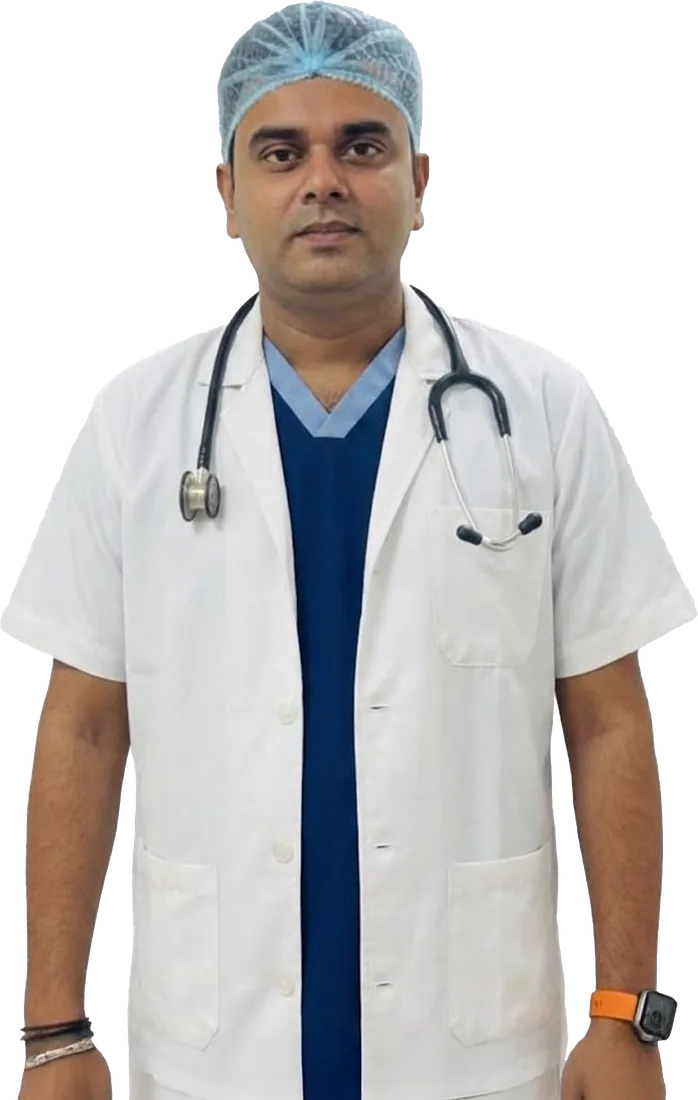
Founder and Chief Surgeon: Laparoscopic, Laser, Urology and General Surgeon
MBBS, DA, MS (General Surgery)
View detailsReal reviews from patients and families, as posted on our Google Business Profile.

I Recently Visited this Clinic in Gopalganj, Earlier I was a bit Hesitant, But Once I met the Doctor, I was so Sure & Confident that I am in Good Hands,
Very Well Experienced Doctor
Well Behaved Staffs
Nice Arrangements
& Most Important, Very Easy Procedure.
Would Always be Thankful to Mr. RK Thakur & His Team.
My relative hernia surgery at Dr RK Thakur Hospital Went Very Well, Skilled Doctors, Caring Staff and Smooth recovery, Highly Satisfied.
डाक्टर साहब बहुत अच्छे है उनका बात करने का अंदाज बहुत ही निराला है स्टाफ के बारे में कुछ नहीं कहा जा सकता बाकी हॉस्पिटल अच्छा हैDoctor sahib is very good, and the way he talks to patients is truly special. I cannot say much about the staff, but otherwise the hospital is good.
Share your name and phone number. Our team will call you back to plan your OPD visit.
