When a surgeon advises an operation, one of the first questions families ask is: will it be done by doorbeen or by cutting? Doorbeen is the word many people in Bihar and Uttar Pradesh use for laparoscopic surgery. Below, our surgical team explains laparoscopic vs open surgery: the difference between the two methods, the benefits and limits of each, and why a surgeon sometimes chooses, or switches to, open surgery for your safety.
What is open surgery?
In open surgery, the surgeon makes one larger cut on the abdomen, long enough to see and work on the organs directly. The length of the cut depends on the operation. Open surgery is the traditional method and is still the right choice in many situations.
What is laparoscopic surgery?
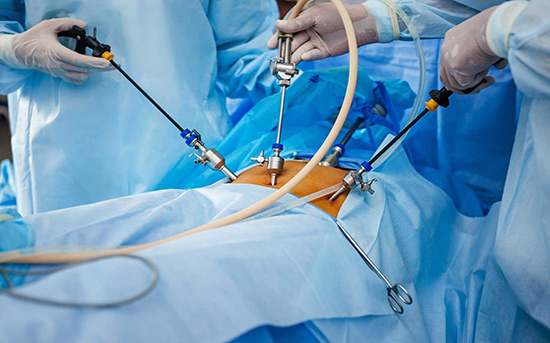
In laparoscopic surgery, also called keyhole or minimally invasive surgery, the surgeon makes a few small cuts, usually about 0.5 to 1.5 cm long. A thin camera called a laparoscope goes in through one cut and shows the inside of the abdomen on a screen. Carbon dioxide gas is used to gently lift the abdominal wall and create space. Long, thin instruments go in through the other cuts.
Common operations done this way include gallbladder removal, appendix removal, hernia repair and diagnostic laparoscopy, which means looking inside the abdomen to find the cause of a problem.
Benefits of laparoscopic surgery
For suitable patients, laparoscopic surgery usually offers:
- Smaller cuts and small scars instead of one long wound.
- Less pain after surgery than open surgery.
- A shorter hospital stay, often 1 to 2 days for common operations.
- Earlier walking and eating, which helps prevent chest infection and blood clots.
- A quicker return to daily work for most patients.
- Fewer wound problems, such as wound infection or a hernia forming in the scar later.
These are general benefits. How quickly each person recovers depends on the illness, age, other health problems and the type of operation.
When open surgery may be safer
Laparoscopic surgery is not the right choice for every patient. A good surgeon chooses the method that is safest for you, not the one that sounds more modern. Open surgery may be preferred when:
- The patient is very sick, for example with a burst intestine, widespread infection in the abdomen (peritonitis) or very low blood pressure, and needs the most direct operation.
- There are serious heart or lung problems, because the gas used in laparoscopy puts extra load on breathing and circulation.
- Several earlier abdominal operations have left thick adhesions, which are bands of internal scar tissue.
- The intestine is badly swollen, as in some cases of intestinal obstruction, leaving little room to work.
- There is a very large or complex hernia, certain cancers, or another situation where the surgeon needs to handle the organs directly.
Every case is different. Some of these situations can still be managed laparoscopically, and some cannot. Your surgeon will explain the reason for the choice in your case.
What does conversion to open surgery mean?
Sometimes an operation starts laparoscopically and the surgeon decides, partway through, to make a larger cut and finish it as open surgery. This is called conversion. Common reasons are:
- The organs cannot be seen clearly because of severe swelling or infection.
- Dense adhesions from earlier operations or infections.
- Bleeding that is safer to control through an open cut.
- Unusual anatomy, or a finding that needs a bigger operation.
Conversion is a safety decision, not a failure. It protects important structures such as the bile duct, blood vessels and intestine. Before surgery, our surgeon explains this possibility to you and your family, and the consent form you sign includes it. If conversion happens, the hospital stay and recovery will be closer to that of open surgery.
Cost and time: what to consider
- Cost: laparoscopic surgery needs special equipment, so the operation charge can sometimes be higher. A shorter stay and an earlier return to work can reduce the overall burden on the family. At our hospital, we explain the expected costs before admission.
- Ayushman Bharat: PM-JAY card holders can ask our Ayushman help desk whether their procedure is covered.
- Operation time: a laparoscopic operation is not always quicker. Some take a similar time or a little longer, especially difficult ones.
- Time off work: after laparoscopic surgery, many patients return to light work in about 1 to 2 weeks. After open surgery, recovery usually takes longer. Your surgeon will advise you for your own case.
Both have risks
Both types of surgery carry risks such as bleeding, infection, reactions to anaesthesia, blood clots and, rarely, injury to nearby organs. Small cuts do not mean a small operation inside. The work done on the gallbladder, appendix or hernia is the same; only the way in is different. Follow all instructions before and after surgery, whichever method is used.
Questions to ask your surgeon
- Can my operation be done laparoscopically? If not, why?
- What is the chance of conversion to open surgery in my case?
- How many days will I stay in hospital?
- When can I go back to my work, including farm or heavy work?
- What will the total cost be, and is it covered under my Ayushman card?
When to see a doctor
If you have been told you need surgery for gallbladder stones, appendix, hernia or another abdominal problem, meet a surgeon to discuss which method is right for you. Come to the emergency straight away if you have severe stomach pain, repeated vomiting, a swollen belly or fever. Our emergency is open 24x7.
At Dr. R.K. Thakur Hospital, we offer keyhole surgery in Gopalganj to patients from Gopalganj, Siwan, Chhapra and nearby districts. Before any operation, Dr. Rajnish Kumar Thakur, our founder and chief surgeon, explains whether the laparoscopic or the open method is safer for your condition. You can read more about our laparoscopic gallbladder stone surgery, one of the most common keyhole operations.
With 16+ years of experience, Dr. Rajnish Kumar Thakur performs laparoscopic operations such as gallbladder stone surgery and appendix surgery, as well as hernia repair, and chooses open surgery when it is the safer option. Please call or WhatsApp us on +91 72739 94786 to book an OPD visit. After an operation, our guide on recovery after laparoscopic surgery can help you plan.