Abscess Drainage (I&D)
We open and drain a pus-filled abscess (boil) to relieve pain and clear the infection, with a blood sugar check and a clear dressing schedule until the wound heals.
We treat pilonidal sinus, the painful, pus-leaking pit near the tailbone, at our hospital in Gopalganj: abscess drainage, laser-assisted closure or excision surgery, with hair care advice to lower recurrence.
At Dr. R.K. Thakur Hospital, we provide pilonidal sinus treatment in Gopalganj for the painful, pus-leaking pit near the tailbone, with care and privacy. We drain an abscess first, and then treat the sinus with pilonidal sinus laser treatment for suitable cases or with excision surgery. Care is led by Dr. Rajnish Kumar Thakur, our founder and chief surgeon, MS (General Surgery), a laparoscopic, laser and general surgeon, and our hospital has its own diode laser. The problem is common in young men, drivers, students and others who sit for long hours. Our patients come from Gopalganj, Siwan, Chhapra, Motihari, Bettiah and the nearby Uttar Pradesh districts of Kushinagar and Deoria. Families trust Dr. Thakur for his 16+ years of surgical experience, his work at IGIMS Patna and Lady Hardinge Medical College, New Delhi, and his honest advice about the chance of recurrence. Please visit our OPD, Monday to Friday, 10 am to 7 pm, or send your reports on WhatsApp to +91 72739 94786.
A pilonidal sinus (कूल्हे की दरार में बालों वाला साइनस) is a small tunnel under the skin in the cleft between the buttocks, directly above the tailbone. Loose hairs get pushed into the skin there by sitting and friction. The body treats them as foreign material, which leads to infection, a painful abscess, and later a track that keeps leaking pus.
It is most common in young men, in people with thick body hair, and in those who sit for long hours, such as drivers, students and office workers. Extra weight and sweating also add to the risk.
A pilonidal sinus does not usually go away with antibiotics alone. Our treatment aims to remove or close the infected track and the hair inside it, and then to keep the area free of hair so that it does not return.
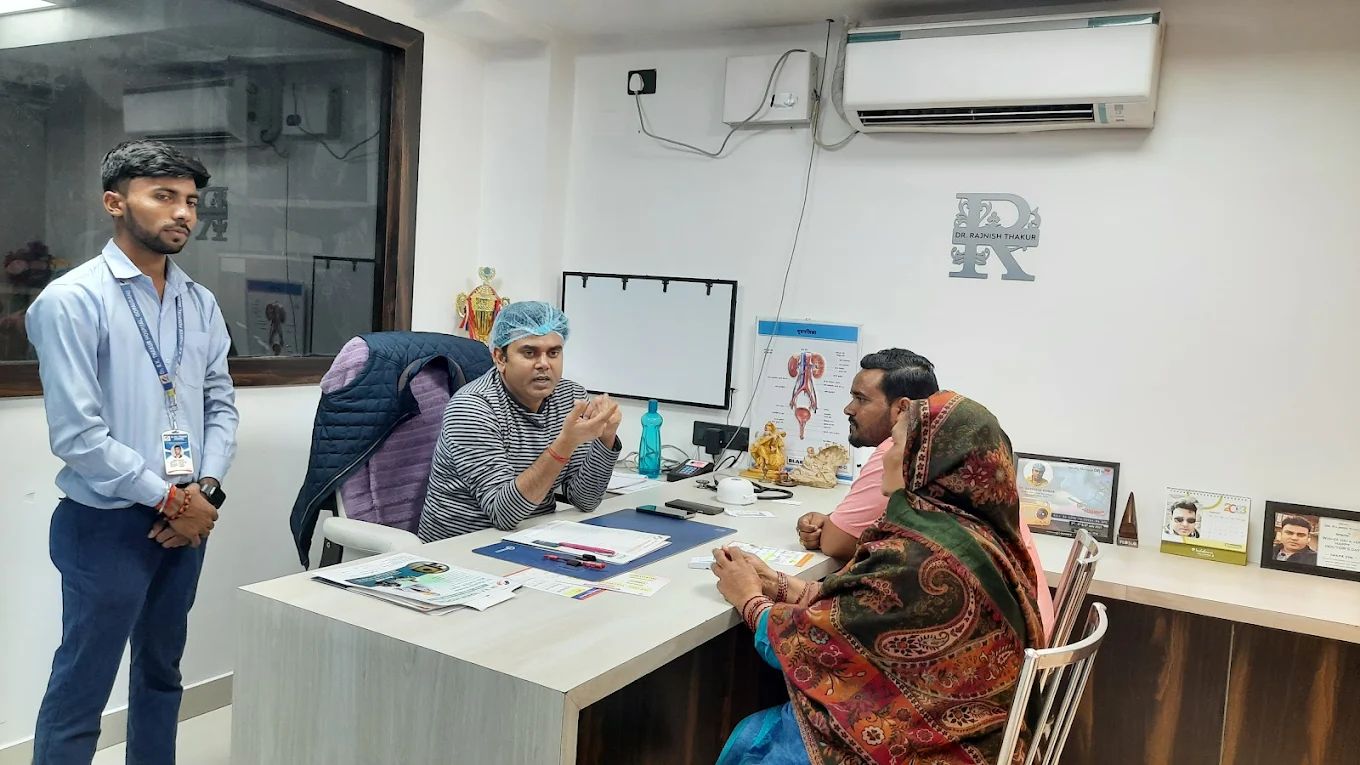
If you have a painful swelling near the tailbone with fever, please see a surgeon quickly. An abscess needs drainage first, and we treat the sinus after the infection settles. Please do not squeeze it, or keep taking antibiotics on your own for months.
We usually make the diagnosis by examination, which is done in privacy. Our surgeon then advises the best method for you. Laser-assisted closure suits many small, simple sinuses: the pits are cleaned, hair is removed, and a thin laser fibre seals the track from inside through small openings. Excision surgery removes the whole track; the wound may be left open to heal, or closed with stitches or with a skin flap moved to one side of the cleft. Large, branching or repeatedly returning sinuses often need excision.
After laser closure, most people return to light work within a few days to a week. After excision, recovery depends on the method: an open wound needs regular dressing and can take several weeks to heal, while a stitched or flap wound must be kept dry and free of pressure. Avoid sitting for long periods in the early weeks. Keep the area clean and dry, and once the wound has healed, remove hair around the cleft regularly by shaving or hair removal cream, as we advise. Please keep every follow-up visit with us.
Good wound and hair care after treatment lowers the chance of the sinus coming back. We guide you through each step.
Possible risks include bleeding, infection, pain, slow wound healing, and fluid collection under a closed wound. A pilonidal sinus can come back in some patients after any method. The chance may be higher after laser closure or midline stitching than after some flap operations, and it is also higher if hair is not kept away from the area. A recurrent sinus can usually be treated again. Our surgeon lowers these risks by choosing the method that fits your sinus and guiding you on wound and hair care.
The pilonidal sinus treatment cost depends on your case, so we do not quote one fixed figure. The main factors are whether an abscess needs drainage first, the method (laser-assisted closure, or excision with an open, stitched or flap wound), the tests needed, the type of anaesthesia, the length of stay (usually about 1 day, a little longer after flap surgery), the room you choose, and dressings and medicines after discharge. After the consultation and reports, we give you a clear written estimate before admission, so your family can plan. You can send your reports on WhatsApp to +91 72739 94786 first.
We are empanelled under Ayushman Bharat PM-JAY for general surgery and laparoscopic surgery packages. Whether your treatment and the chosen method are covered depends on the scheme's package list and your eligibility, so please bring your Ayushman card and Aadhaar card and confirm with our Ayushman help desk before admission.
Our hospital has a diode laser that we use for pilonidal sinus, piles and fistula, along with modern operation theatres for excision surgery. Your care is led by Dr. Rajnish Kumar Thakur, a laparoscopic, laser, urology and general surgeon with 16+ years of surgical experience and 10,000+ surgeries performed. We explain the choice between laser and excision honestly, including the chance of recurrence, and guide you on wound and hair care until healing.
Loose hairs, often from the back or buttocks, are pushed into the skin of the buttock cleft by sitting, sweating and friction. The body reacts to the hair as foreign material, which causes infection and a tunnel under the skin. It is common in young men with thick body hair and in people who sit for long hours, such as drivers. It is a common condition and nothing to feel ashamed about.
If there is an abscess, we drain the pus first and treat the sinus after the infection settles. For the main treatment we give anaesthesia, usually spinal. In laser-assisted closure, the pits are cleaned, hair and debris are removed, and a thin laser fibre seals the track from inside. In excision, the whole track is removed, and the wound is left open, stitched or closed with a skin flap. Our surgeon explains which method suits you.
It depends on the size and type of your sinus. Laser-assisted closure suits many small, simple sinuses and usually means small wounds and a quicker return to work, but the sinus may come back in some patients. Large, branching or repeatedly returning sinuses often do better with excision, sometimes with a flap. Our surgeon decides after examining you and explains the choice to you and your family.
It depends on the method. The procedure itself takes about 30 to 60 minutes, and most patients stay with us about 1 day. After laser closure, most people return to light work within a few days to a week. After excision with an open wound, dressings are needed for several weeks until it heals from the base. A stitched or flap wound must be kept dry and free of pressure until the stitches are removed, as our surgeon advises.
Usually not. Antibiotics and warm compresses can ease an infection for a while, and a small sinus that causes no trouble may only need watching and hair care. But the hair and the infected track under the skin do not go away with medicines alone, so a sinus that keeps leaking or forming abscesses needs a procedure. Please do not squeeze the phoda, and do not keep taking antibiotics on your own for months.
Yes, it can in some patients after any method, and we prefer to be honest about this. You can lower the chance by keeping the area clean and dry, removing hair around the cleft regularly once the wound has healed, taking breaks instead of sitting for hours at a stretch, and keeping a healthy weight. If pain or discharge returns, please see us early.
The cost depends on whether an abscess needs drainage first, the method (laser closure or excision, with an open, stitched or flap wound), the tests, the anaesthesia, the length of stay, the room you choose, and dressings and medicines. We do not quote a figure without examining you. After the consultation and reports, we give you a clear written estimate before admission. You can send your reports on WhatsApp to +91 72739 94786 first.
We are empanelled under Ayushman Bharat PM-JAY for general surgery and laparoscopic surgery packages. Whether your pilonidal sinus treatment and the chosen method are covered depends on the scheme's package list and your eligibility. Please bring your Ayushman card and Aadhaar card, and ask our Ayushman help desk to check before admission. For other patients, we explain the expected cost clearly before admission, so that your family can plan.
After laser closure, only small dressings are usually needed for a short time. After excision with an open wound, regular dressings are needed for several weeks until the wound heals from the base, and our team will teach you or a family member how to care for it. A stitched or flap wound must be kept clean and dry until the stitches are removed. We check the wound at every follow-up visit.
Keep the area clean and dry, and change dressings as we teach you. Avoid sitting for long periods in the early weeks; use a soft cushion and take walking breaks. Eat a balanced diet with protein such as dal, eggs, milk or paneer, and fibre to avoid constipation. Once the wound has healed, remove hair around the cleft regularly, as advised. If you have diabetes, control your sugar. Please report fever, increasing pain or pus early.
We advise choosing a qualified surgeon who can offer both laser closure and excision, and who explains the chance of recurrence honestly. Dr. Rajnish Kumar Thakur, our founder and chief surgeon, MS (General Surgery), is a laparoscopic, laser and general surgeon with 16+ years of surgical experience and 10,000+ surgeries, including experience at IGIMS Patna and Lady Hardinge Medical College, New Delhi. Our hospital has its own diode laser. You can read our patients' reviews on Google.
Yes. Patients come to our hospital in Arar, Gopalganj from Kushinagar, Deoria, Siwan, Chhapra, Motihari and Bettiah. Please send your reports on WhatsApp to +91 72739 94786, then visit our OPD, Monday to Friday, 10 am to 7 pm. If you have a painful swelling with fever, please come to our 24-hour emergency. Most patients stay about 1 day, and we teach dressing care to a family member so it can continue at home.
Share your details and our team will call you back to plan your visit.
This information is for general awareness and does not replace a consultation. Treatment depends on each patient's condition.
Last updated: 30 September 2026
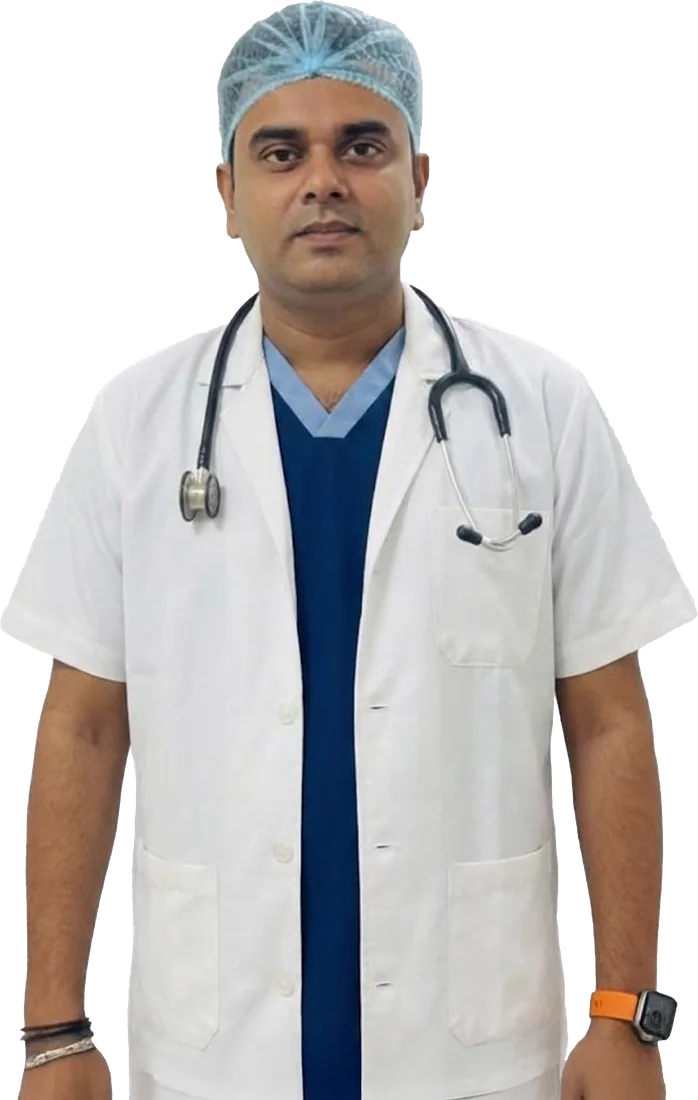
Founder and Chief Surgeon: Laparoscopic, Laser, Urology and General Surgeon
MBBS, DA, MS (General Surgery)
View detailsReal reviews from patients and families, as posted on our Google Business Profile.

I Recently Visited this Clinic in Gopalganj, Earlier I was a bit Hesitant, But Once I met the Doctor, I was so Sure & Confident that I am in Good Hands,
Very Well Experienced Doctor
Well Behaved Staffs
Nice Arrangements
& Most Important, Very Easy Procedure.
Would Always be Thankful to Mr. RK Thakur & His Team.
My relative hernia surgery at Dr RK Thakur Hospital Went Very Well, Skilled Doctors, Caring Staff and Smooth recovery, Highly Satisfied.
डाक्टर साहब बहुत अच्छे है उनका बात करने का अंदाज बहुत ही निराला है स्टाफ के बारे में कुछ नहीं कहा जा सकता बाकी हॉस्पिटल अच्छा हैDoctor sahib is very good, and the way he talks to patients is truly special. I cannot say much about the staff, but otherwise the hospital is good.
Share your name and phone number. Our team will call you back to plan your OPD visit.
