Gallbladder stones are one of the most common reasons people in Gopalganj and nearby districts visit a surgeon. Some families first hear about them when an ultrasound done for another reason shows a stone. Others come after nights of severe pain in the upper stomach. Here our surgical team explains gallbladder stone symptoms, the tests, and when surgery is really needed, in plain words.
What is the gallbladder and why do stones form?
The gallbladder is a small pouch under the liver, on the right side of the upper abdomen. It stores bile, a digestive juice made by the liver that helps digest fatty food.
When bile becomes too thick or its balance changes, tiny crystals form and slowly grow into stones. Stones can be as small as grains of sand or as large as a marble. A person may have one stone or many.
Gallstones are more common in women, in people over 40, in people who are overweight, after pregnancy, in people with diabetes and after quick weight loss. They can still happen to anyone, including young adults.
Common symptoms of gallbladder stones
Many people have stones without any symptoms. These are called silent stones. When symptoms do appear, they usually include:
- Pain in the upper right or upper middle part of the stomach, often after a heavy or oily meal, and often at night.
- Pain that spreads to the back or to the right shoulder.
- Nausea or vomiting along with the pain.
- Gas, bloating and heaviness after meals, though these also come from many other stomach problems.
An attack of gallstone pain (called biliary colic) may last from about half an hour to a few hours and then settle. Many people mistake it for acidity or gas.
Signs of a complication
Sometimes a stone causes a more serious problem. Please come to hospital without delay if you notice:
- Pain that does not settle after several hours, especially with fever and shivering. This can mean infection of the gallbladder (cholecystitis).
- Yellow eyes or skin, dark urine or pale stools. This is jaundice and may mean a stone has slipped into the bile duct.
- Severe upper stomach pain going through to the back, with repeated vomiting. This can be pancreatitis, an inflammation of the pancreas.
Tests that confirm gallbladder stones
- Ultrasound of the abdomen: the main test. It is quick, uses no radiation, and shows the stones, the gallbladder wall and the width of the bile duct. You are usually asked to come on an empty stomach.
- Blood tests: liver function tests, blood counts and, when needed, pancreas tests, to look for infection, jaundice or pancreatitis.
- Extra scans when needed: if the bile duct looks wide or you have jaundice, the doctor may advise a further scan (such as MRCP) to look for stones in the bile duct.
- Fitness tests before surgery: such as blood sugar, ECG and chest X-ray, depending on your age and health.
At Dr. R.K. Thakur Hospital, we have ultrasound, pathology tests, digital X-ray and ECG under one roof. Please bring all your old reports and ultrasound papers with you.
When is surgery needed?
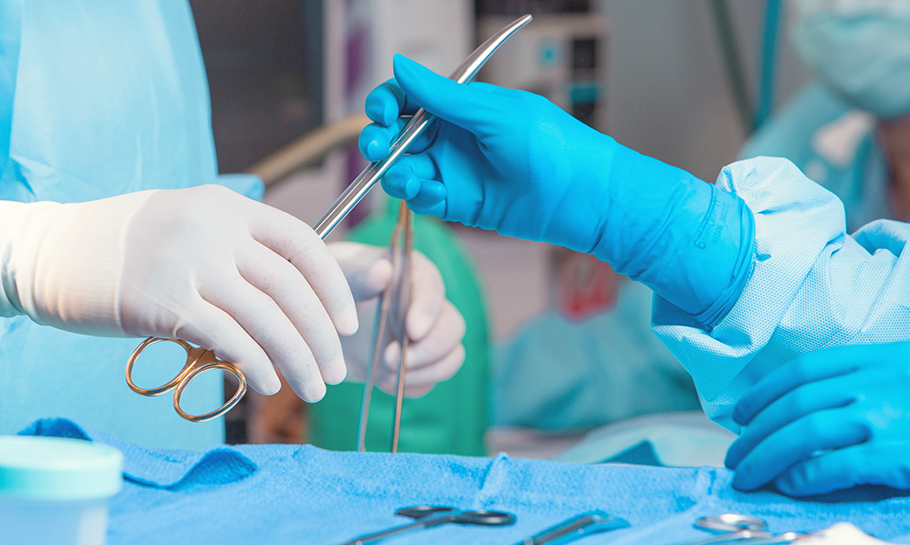
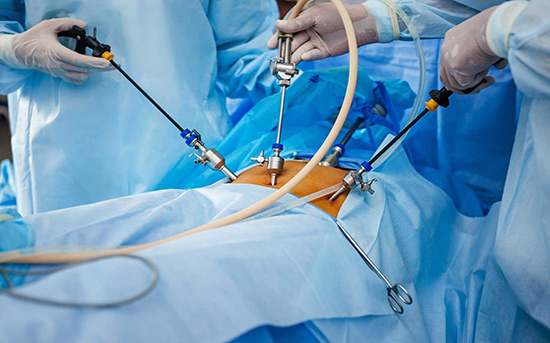
The standard treatment for gallbladder stones that cause symptoms is removal of the gallbladder, called cholecystectomy. In most patients this is done by laparoscopic surgery, the keyhole method many people call doorbeen surgery, through a few small cuts.
Surgery is usually advised when:
- You have had one or more attacks of gallstone pain.
- You have had a complication such as gallbladder infection, jaundice due to stones, or pancreatitis.
- The ultrasound shows other findings, such as a gallbladder polyp or a thickened wall, and the surgeon feels removal is safer.
If silent stones were found by chance and you have no symptoms, surgery is not always needed. Our surgeon will consider your age, health and ultrasound findings, and may advise waiting and watching for warning signs.
If a stone has slipped into the main bile duct (CBD), it also has to be cleared. Depending on the situation, this is done with an endoscopic procedure or by CBD exploration, which means surgically opening the duct to remove the stones. Our surgeon will explain which option suits you.
Common myths about gallbladder stones
Myth: home remedies will dissolve the stones
Many people are told that lemon water, apple juice, olive oil, kulthi dal or a special powder will melt the stones or flush them out. There is no reliable evidence that these remedies dissolve gallbladder stones. What some people pass after an oil flush is usually not stones at all, but lumps formed from the oil itself. Meanwhile, the stones stay inside and can cause complications.
Some prescription medicines can slowly dissolve certain small cholesterol stones in carefully chosen patients, but they take many months and the stones often return after the medicine is stopped.
Myth: only the stones should be removed, not the gallbladder
Some patients ask us whether the stones alone can be taken out and the gallbladder kept. A gallbladder that has formed stones once is likely to form them again. That is why the accepted treatment is removal of the whole gallbladder along with the stones.
Myth: you cannot live normally without a gallbladder
After the gallbladder is removed, the liver keeps making bile, which then flows directly into the intestine. Most people return to their normal diet within a few weeks.
What to expect from the operation
Laparoscopic gallbladder surgery is done under general anaesthesia through 3 or 4 small cuts. Most patients go home in 1 to 2 days, depending on their condition. Sometimes the surgeon switches to open surgery for safety, for example if there is heavy swelling or bleeding. Read more in our guides on laparoscopic vs open surgery and recovery after laparoscopic surgery.
When to see a doctor
- You get repeated pain in the upper right stomach after meals.
- An ultrasound has shown gallbladder stones and you are unsure what to do next.
- You have diabetes or another long-term illness and have been told you have stones.
- You have fever, yellow eyes or severe pain with vomiting. This needs urgent care, and our emergency is open 24x7.
At Dr. R.K. Thakur Hospital, we treat patients with gallbladder stones from Gopalganj, Siwan, Chhapra and nearby districts. You are welcome to send us your ultrasound report on WhatsApp before you travel. You can read more about our laparoscopic gallbladder stone surgery.
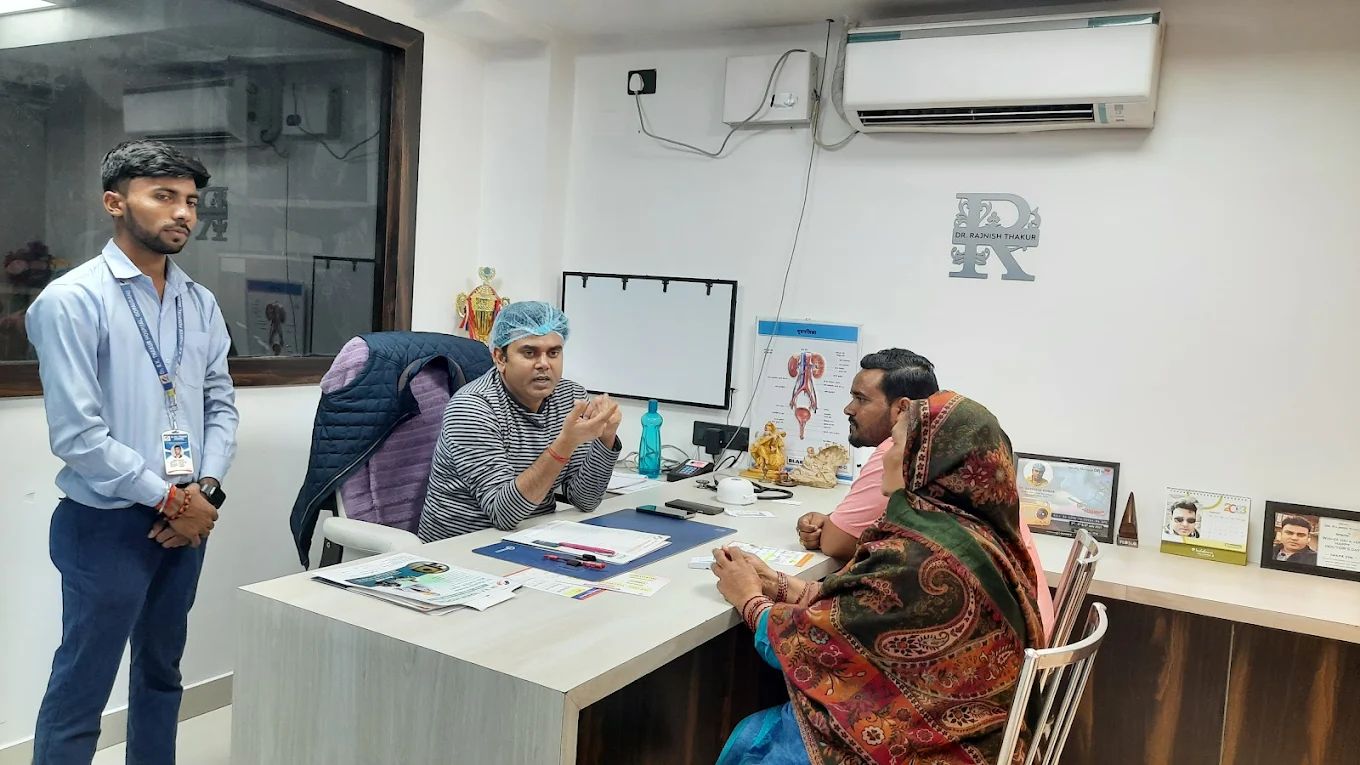
In our hospital, gallbladder stones are assessed and treated by Dr. Rajnish Kumar Thakur, our founder and chief surgeon, a laparoscopic and general surgeon with 16+ years of experience. Please call or WhatsApp us on +91 72739 94786 to book an OPD visit, or see our contact page. Ayushman Bharat card holders are welcome to ask our Ayushman help desk whether their treatment is covered.