Abscess Drainage (I&D)
We open and drain a pus-filled abscess (boil) to relieve pain and clear the infection, with a blood sugar check and a clear dressing schedule until the wound heals.
We treat diabetic foot ulcers and infected or non-healing wounds with debridement (removal of dead tissue), regular dressings, sugar control and advice to protect the limb.
If you or a family member has diabetes and a foot wound that is not healing, we provide careful diabetic foot treatment in Gopalganj at Dr. R.K. Thakur Hospital. We use the same careful approach for other non-healing wound treatment, such as infected injury wounds, bedsores and wounds after surgery. Dr. Rajnish Kumar Thakur, our founder and chief surgeon, MS (General Surgery), and our team remove dead and infected tissue (debridement), drain pus, plan regular dressings and work with you on sugar control, with the aim of saving the limb wherever possible. Patients come to us from Gopalganj, Siwan, Chhapra, Motihari, Bettiah, Kushinagar and Deoria, and our pathology lab, digital X-ray, pharmacy and ICU are under one roof. Families trust Dr. Thakur for his 16+ years of surgical experience, more than 10,000 surgeries and patient care over weeks of treatment. Please come early, because even a small blister on a diabetic foot needs attention. Visit our OPD (Monday to Friday, 10 am to 7 pm), or come to our emergency with fever, pus or blackening.
A wound that does not heal in the usual time, or keeps getting infected, needs proper surgical care. Diabetes is one of the most common causes. High sugar damages the nerves, so the foot loses feeling and small injuries go unnoticed. It also weakens blood flow and the body's defence against infection. A small blister or crack can turn into a deep ulcer, a pus collection or blackened skin (gangrene).
Other examples are infected injury wounds, bedsores, varicose vein ulcers and wounds after surgery.
Debridement means removing dead, infected and unhealthy tissue from a wound so that healthy tissue can grow. It may be a small procedure at the bedside or an operation in the theatre under anaesthesia, and it sometimes needs to be repeated. It is combined with regular dressings, antibiotics when needed, blood sugar control, and keeping pressure off the wound.
Please see a surgeon if a wound has not started healing in about 2 weeks, and come at once if there is pus, spreading redness, blackening or fever. People with diabetes should get even a small foot wound checked early.
Our team checks blood sugar and other blood tests, may take a swab of pus for culture, and uses X-ray to look for bone infection or gas in the tissues. We check blood flow in the leg by examination, and may advise further tests at a higher centre if circulation is poor.
When does the risk of amputation rise? The risk of losing a toe, part of the foot or the leg increases when there is gangrene, infection spreading up the foot or leg, infection in the bone, very poor blood supply, or delay in treatment. Early debridement and good sugar control give the best chance of saving the limb. If removing a part becomes necessary to control infection and protect life, our surgeon explains this openly to the family.
Chronic wounds heal slowly, often over several weeks. Please keep your dressing appointments, take medicines on time and keep blood sugar in control with your doctor's help. Keep weight off the affected foot as advised and use the recommended footwear. Eat a nourishing diet with enough protein, and stop smoking. Please come back at once if there is new pain, swelling, a bad smell, fever or blackening.
What you do every day at home decides how well the wound heals and whether the other foot stays safe:
Debridement can cause bleeding and pain, and the wound may look larger after dead tissue is removed; this is expected and allows healing. More than one session may be needed. Even with good care, some wounds heal slowly, infection can spread, and in severe cases a toe or part of the limb may need to be removed. We lower these risks by acting early, controlling infection and sugar, and following up closely.
A diabetic foot or chronic wound often needs weeks of care, so the cost cannot be fixed on the first day. It mainly depends on:
We explain the likely plan and costs step by step, and you can send your reports on WhatsApp first. If poor blood flow needs tests or treatment at a higher centre, we explain the reason to you. Our hospital is empanelled under Ayushman Bharat PM-JAY for general surgery packages, which cover surgical wound care and debridement for eligible card holders. Our Ayushman help desk confirms the exact package, so please bring your Ayushman card and Aadhaar card.
Dr. Rajnish Kumar Thakur, MS (General Surgery), with 16+ years of surgical experience and more than 10,000 surgeries, and our team treat diabetic foot and chronic wounds with patience, because these wounds need weeks of regular care. Our anaesthesia specialist is available for debridement in the theatre.
Our pathology lab, digital X-ray, pharmacy and an ICU for severe infection are all in the same hospital. We also explain home care of the wound and the other foot to the family.
High blood sugar weakens the body's defence against germs, reduces blood flow and damages nerves, so the foot does not feel pain and pressure keeps falling on the wound. All of this slows healing. Keeping sugar in control, keeping weight off the wound, regular dressings and removing dead tissue help the wound heal faster.
Sugar wala ghav is the everyday term for a wound in a person with diabetes. On the foot it is dangerous because numb feet do not feel pain, blood flow is weaker and infection spreads fast, so a small blister can turn into a deep ulcer or gangrene within days. Please show any foot wound to a doctor early, even if it does not hurt.
After checking the wound, blood flow, sugar and an X-ray, our surgeon removes dead and infected tissue, at the bedside or in the operation theatre under anaesthesia, and drains any pus. Each session usually takes 20 to 60 minutes, and some wounds need more than one. Healing then usually takes several weeks of regular dressings, sugar control and keeping weight off the foot.
Often the wound looks larger after debridement, because the dead and infected tissue that was hiding the true size of the wound has been removed. This is expected. The clean, healthy tissue left behind can then grow and heal. Leaving dead tissue in place allows infection to spread deeper. Our surgeon will explain what was removed and why.
Many small, clean wounds heal with regular dressings, sugar control, antibiotics when needed and keeping pressure off the wound. When there is dead tissue, pus or spreading infection, debridement is needed, because dead tissue blocks healing and lets infection spread deeper. We can often do a small debridement at the bedside without a full operation. Our surgeon explains what your wound needs and why.
Follow your diabetic diet and keep sugar controlled, because high sugar slows healing more than anything else. Include protein at every meal, such as dal, chana, milk, curd, eggs, fish or paneer, with green vegetables and whole grains. Limit sweets, sugary drinks, large helpings of white rice and fried food. Drink enough water unless your doctor restricts fluids, and stop smoking completely.
In many patients, yes, especially when they come early. Timely debridement, good sugar control, antibiotics and proper dressings give the best chance of saving the foot. The risk of amputation rises with gangrene, spreading infection, bone infection, very poor blood flow and delay. If amputation becomes necessary to protect life, our surgeon explains the reasons openly to the family.
Check your feet every day for cuts, cracks, blisters or colour change, using a mirror if needed. Wash and dry them well, especially between the toes. Do not walk barefoot, even at home. Wear soft, well-fitting footwear. Cut nails straight across. Do not use hot water bottles or apply home remedies on wounds. Keep sugar controlled and do not smoke.
The cost depends on how deep and infected the wound is, the number of debridement sessions, tests such as sugar, blood tests, X-ray and pus culture, the days in hospital, ICU care for severe infection, the room, dressings and medicines. Chronic wounds need weeks of care, so we explain the likely plan and costs step by step. Ayushman card holders can ask our help desk about coverage.
Surgical wound care and debridement fall under our Ayushman Bharat PM-JAY empanelment for general surgery, for eligible card holders. The exact package depends on the treatment you need and is confirmed by our Ayushman help desk. Please bring your Ayushman card and a photo ID such as Aadhaar, and ask our help desk before admission.
Yes. We regularly treat patients from Bettiah, Deoria, Siwan, Chhapra, Motihari and Kushinagar. Please come early, because delay raises the risk of losing a toe or part of the foot. Bring your sugar reports and medicines, and call or WhatsApp +91 72739 94786 first. After the first treatment, we explain home care of the wound and plan your visits for dressings, check-ups and any further debridement.
Diabetic foot care needs a surgeon who removes dead tissue properly, controls infection, works with you on sugar control and tries hard to save the limb. Dr. Rajnish Kumar Thakur, our founder and chief surgeon, MS (General Surgery), has 16+ years of surgical experience and more than 10,000 surgeries. Our pathology lab, digital X-ray, pharmacy and ICU are in the same hospital, and we teach families how to care for the wound at home.
Share your details and our team will call you back to plan your visit.
This information is for general awareness and does not replace a consultation. Treatment depends on each patient's condition.
Last updated: 30 September 2026
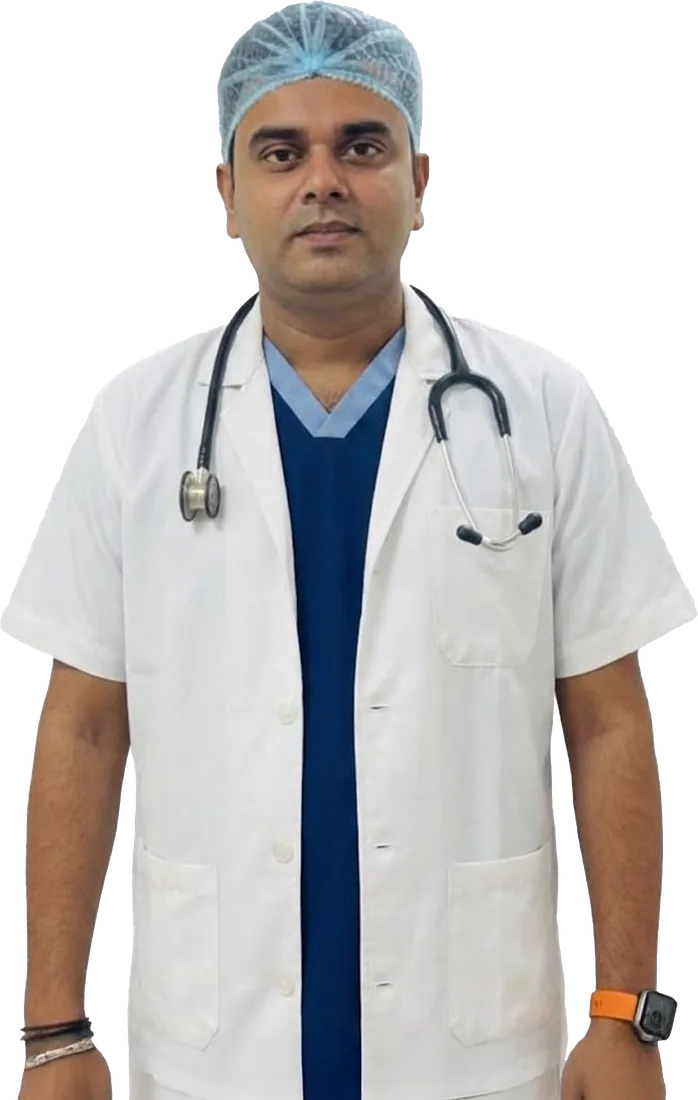
Founder and Chief Surgeon: Laparoscopic, Laser, Urology and General Surgeon
MBBS, DA, MS (General Surgery)
View detailsReal reviews from patients and families, as posted on our Google Business Profile.

I Recently Visited this Clinic in Gopalganj, Earlier I was a bit Hesitant, But Once I met the Doctor, I was so Sure & Confident that I am in Good Hands,
Very Well Experienced Doctor
Well Behaved Staffs
Nice Arrangements
& Most Important, Very Easy Procedure.
Would Always be Thankful to Mr. RK Thakur & His Team.
My relative hernia surgery at Dr RK Thakur Hospital Went Very Well, Skilled Doctors, Caring Staff and Smooth recovery, Highly Satisfied.
डाक्टर साहब बहुत अच्छे है उनका बात करने का अंदाज बहुत ही निराला है स्टाफ के बारे में कुछ नहीं कहा जा सकता बाकी हॉस्पिटल अच्छा हैDoctor sahib is very good, and the way he talks to patients is truly special. I cannot say much about the staff, but otherwise the hospital is good.
Share your name and phone number. Our team will call you back to plan your OPD visit.
